Session overview
The speaker introduces the three pillars of trading success: trading systems, business practices, and psychology. They emphasize the importance of psychology and the role of failure in the learning process.
01 9:28 The Three Pillars of Trading Success and the Role of Psychology
The speaker introduces the three pillars of trading success: trading systems, business practices, and psychology. They emphasize the importance of psychology and the role of failure in the learning process.


Trading success depends on three pillars: a trading system, proper business practices, and the right psychology.
Even with a perfect trading system or business model, proper psychology is necessary to ensure success.
02 12:41 Failure and Learning in Trading
The chapter begins by discussing the inevitability of failure in trading and its role in learning and success. It then transitions to the trader's struggles with consistent losses and the role of mentorship in addressing missed opportunities and the challenge of maintaining consistency in trading.
Failure is an essential part of trading and learning. It is temporary and necessary for success. Traders must embrace failure as a learning opportunity rather than a setback.
A trader struggled with mentorship and trading performance, losing money despite guidance. The mentors suggested adjustments that the trader felt were unrealistic to consistently execute.
03 18:31 Challenges, Confidence, and Mindset in Trading
This chapter covers a difficult trade involving an Ion Condor and software issues, leading to significant losses. It then explores the trader's doubts about their mentor's experience, the risks of copy trading, and the importance of confidence, adaptability, and self-reliance in trading. The chapter concludes with a discussion on the mindset differences between traders who create their own methodologies and those who rely on others.
One of the biggest fears I see with coaching traders is the fear of taking a loss. This fear stems from imagining losing something extremely important that cannot be replaced or experiencing massive pain.
Having the confidence in yourself that you can adapt to changes and make money back, regardless of external factors, is critical for successful trading. Copy trading can lead to a lack of self-confidence and an over-reliance on others' decisions.
04 27:10 Confidence, Adaptability, and Risk Management in Trading
The speaker discusses the importance of confidence and adaptability in trading, highlighting the consequences of relying on others' systems or trade alerts. It also covers the need for a solid trading plan, journaling, and identifying common mistakes like trading without a plan or risking too much money.
Traders with high confidence can objectively assess when their methodology stops working and adapt accordingly, whereas traders relying on trade alerts without understanding may continue losing money.
A proven method for improvement involves creating a trading plan, maintaining a trading journal, and using these journals to assess performance and improve the trading plan.
05 32:39 Psychological Aspects of Behavior Change and Trading
The speaker explores the psychological aspects of behavior change, emphasizing the role of beliefs, values, and willpower. It transitions to trading, explaining how a trader's belief in their trading plan affects their behavior and risk management.
Changing a behavior is difficult when it conflicts with a belief. The only way to change the behavior is through willpower, which is demanding on the mind and easily gives way to the old behavior when focus wanes.
In trading, changing a behavior like following a plan is difficult if there is a lack of belief in the plan. The mind will prioritize short-term relief over long-term security when there is doubt in the plan.
06 40:25 Alignment of Beliefs, Values, and Identity
The chapters explore the importance of aligning beliefs, values, and identity to achieve desired behavior and success. Misalignment leads to stress, fear, and difficulty in trading, while alignment brings relaxation, focus, and effortless progress. Awareness of one's identity, values, and beliefs is crucial for this alignment, and feeling happy and joyful indicates success in this process.
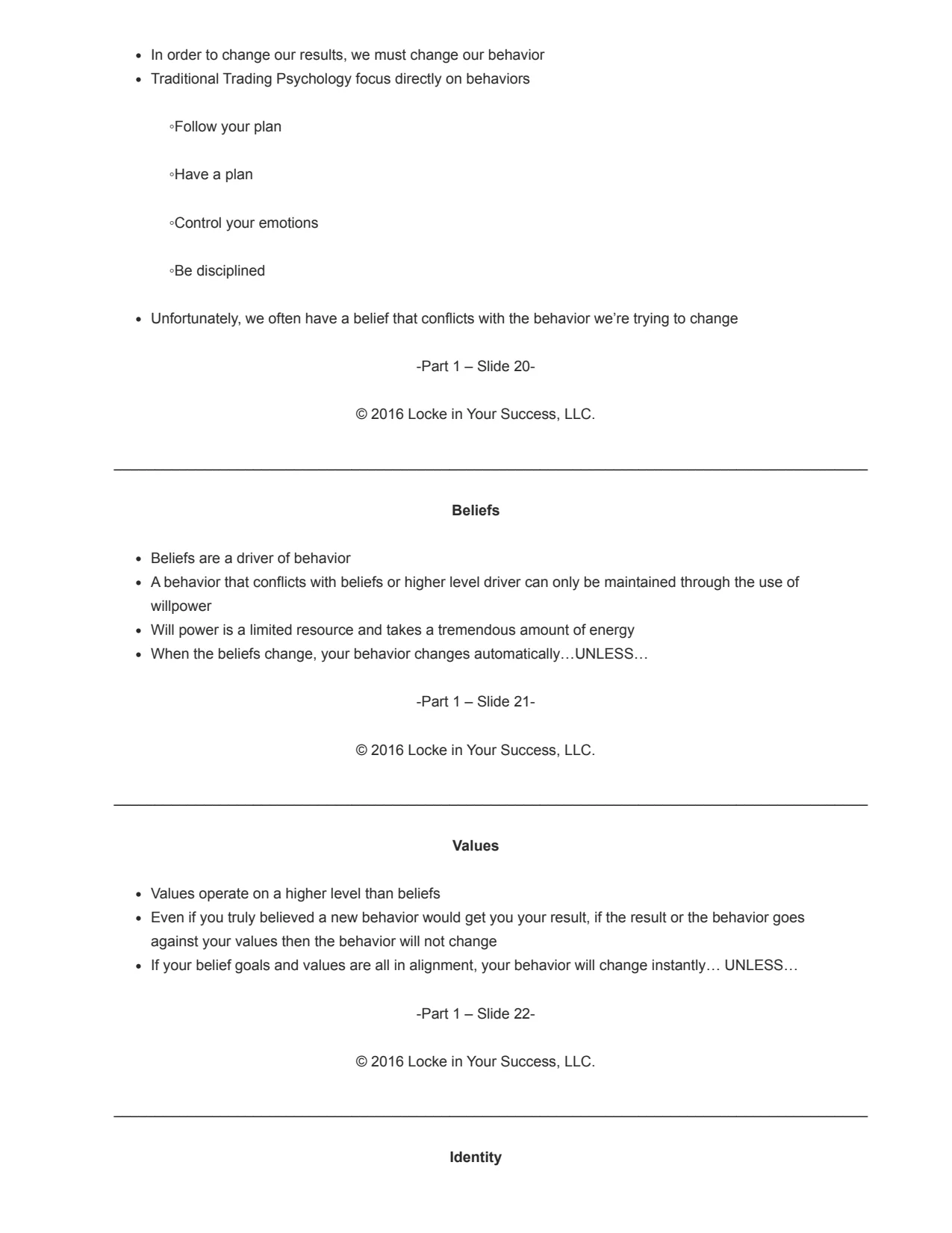

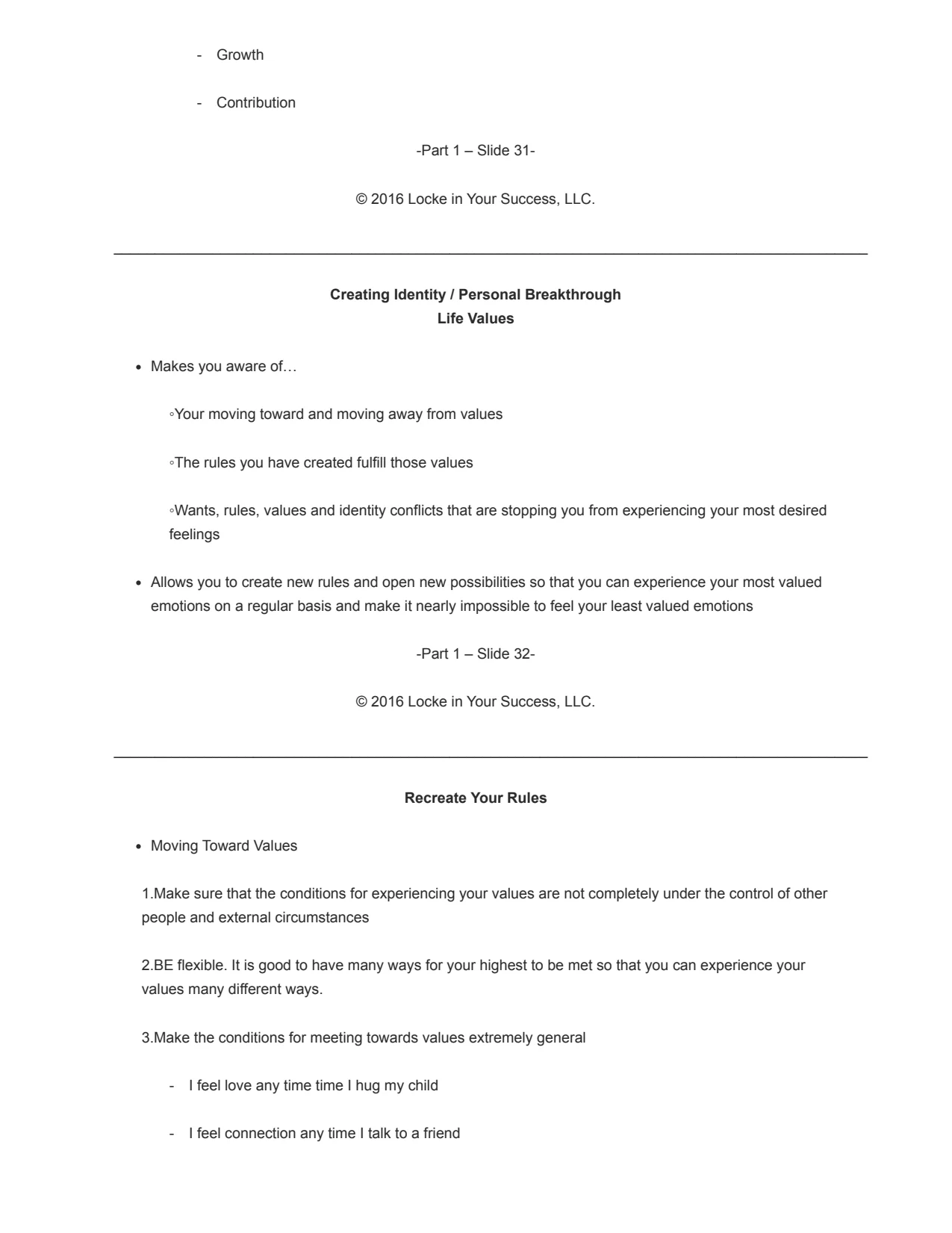

When beliefs, values, and identity are aligned, behavior changes instantly and consistently. Misalignment leads to stress, fear, and conflicting actions that prevent success.
Identity is the strongest driving force in human behavior. People unconsciously act in ways that maintain their identity, even if it conflicts with their beliefs, values, or wants.
07 50:30 Challenges of Misaligned Desires and Identity
The chapters discuss the consequences of misaligned desires and identity, including the problems of seeking jealousy and unrealistic goals. Driving fast cars and seeking validation through others' jealousy are examples of misaligned behavior. The importance of defining clear goals and understanding the conflict between identity and wants is emphasized for personal and productive growth.
Pursuing unrealistic goals can lead to frustration, loss of relationships, and a sense of emptiness, as these goals often do not align with one's true desires or values.
Envy can lead to the deterioration of relationships, as envious individuals tend to turn against those they feel are different from them.
08 53:47 Identity, Behavior, and Human Needs
The speaker explores how identity influences behavior and goals, emphasizing the need to align actions with personal identity. They introduce the concept of human needs, highlighting the role of identity and rules in shaping human behavior and needs.

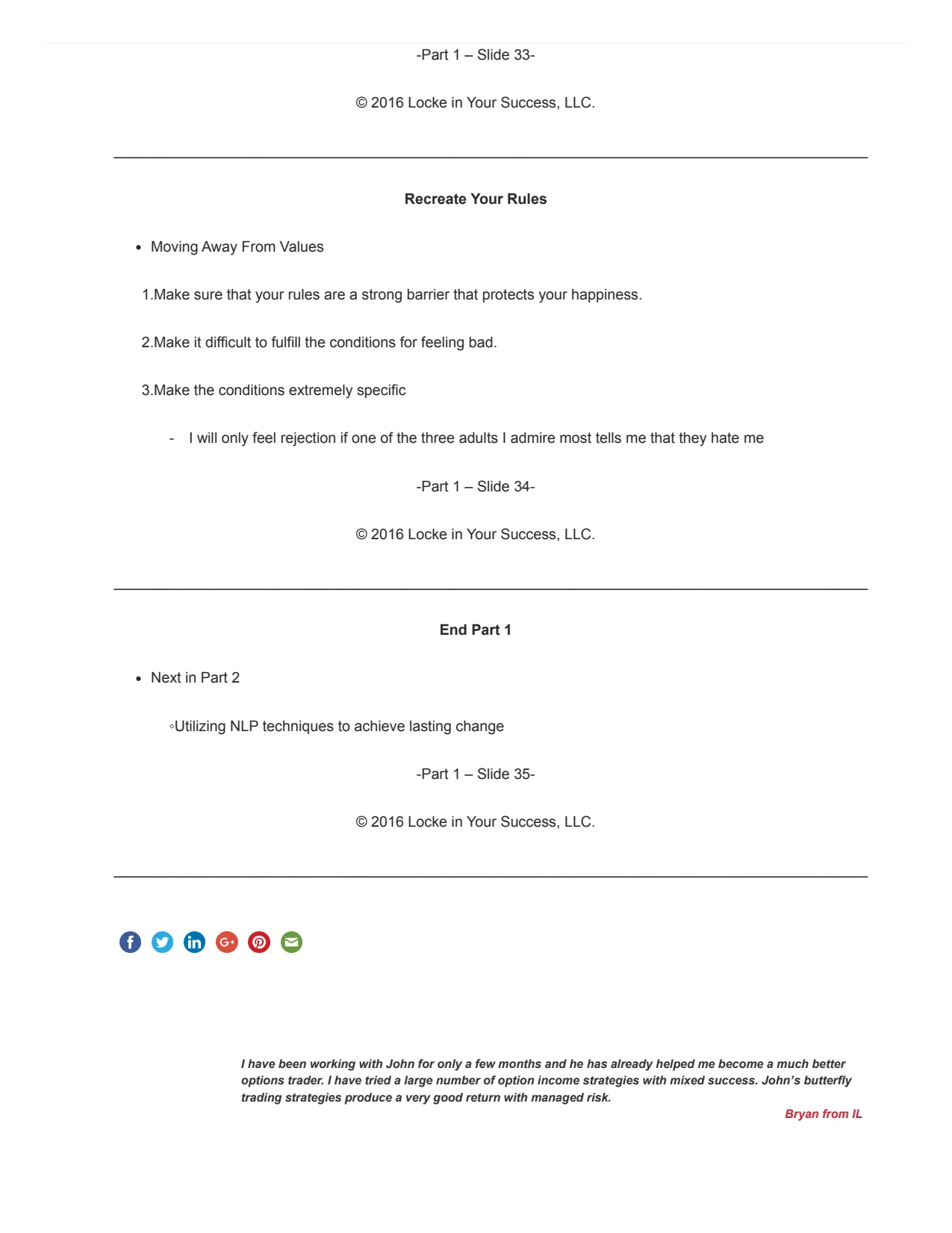
Behaviors are an extension of identity, and to achieve desired outcomes, one must either lower their wants to match their identity or change their identity to align with the behaviors needed to achieve those wants.
Success is defined by personal identity rules, and these rules can create internal conflicts that prevent achieving goals, even when the goal is desired.
09 56:51 The Six Human Needs and the Need for Significance
The speaker introduces the six human needs, distinguishing them from wants and emphasizing their essential nature. They focus on the need for significance, explaining how people seek to feel special and how this drives motivation and behavior.
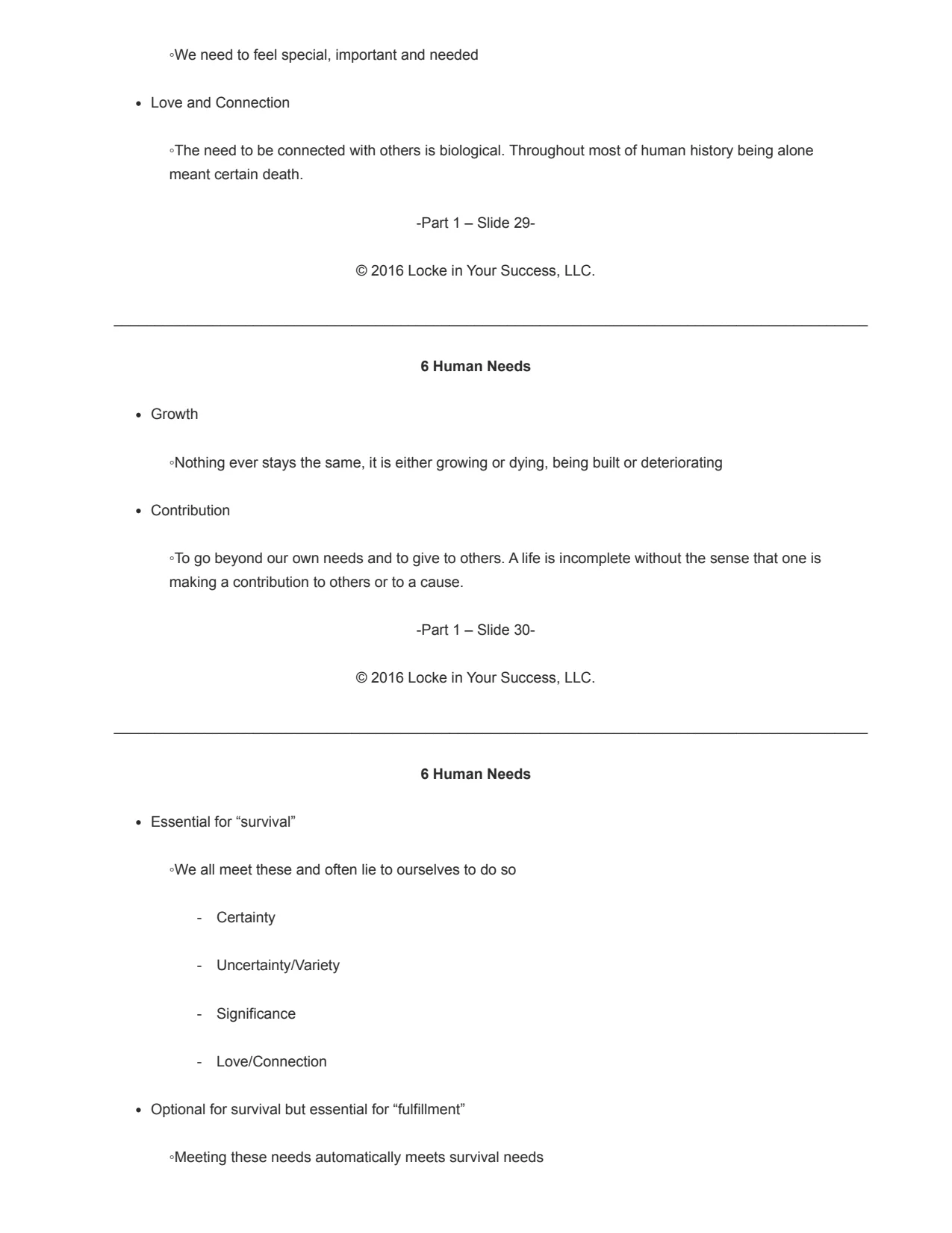
The six human needs—certainty, uncertainty, significance, connection, growth, and contribution—shape behavior and emotional responses. These needs are not wants but essential psychological drivers that influence decision-making and well-being.
A lack of uncertainty can lead to emotional distress, even for individuals who have achieved significant success. This is because uncertainty is a fundamental human need that drives engagement and fulfillment.