Session overview
The video discusses the importance of aligning goals with beliefs and identity for successful behavior change. It explores the role of belief in success, the function of the mind, and exercises to communicate with the unconscious mind. The content includes guided imagery and visualization techniques to facilitate change and self-awareness.
01 3:17 Mind Transformation and Behavioral Change
The video discusses the importance of aligning goals with beliefs and identity for successful behavior change. It explores the role of belief in success, the function of the mind, and exercises to communicate with the unconscious mind. The content includes guided imagery and visualization techniques to facilitate change and self-awareness.
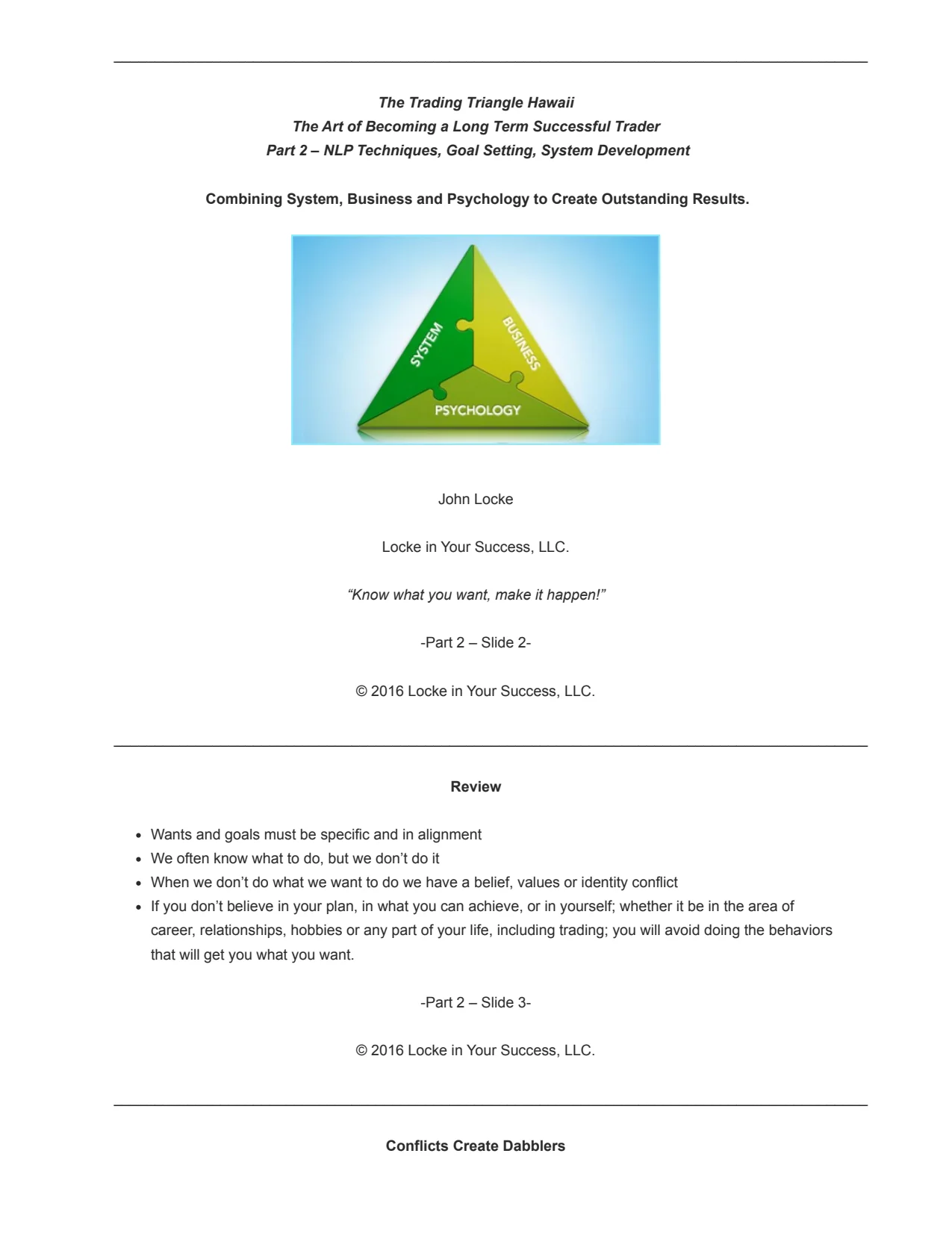
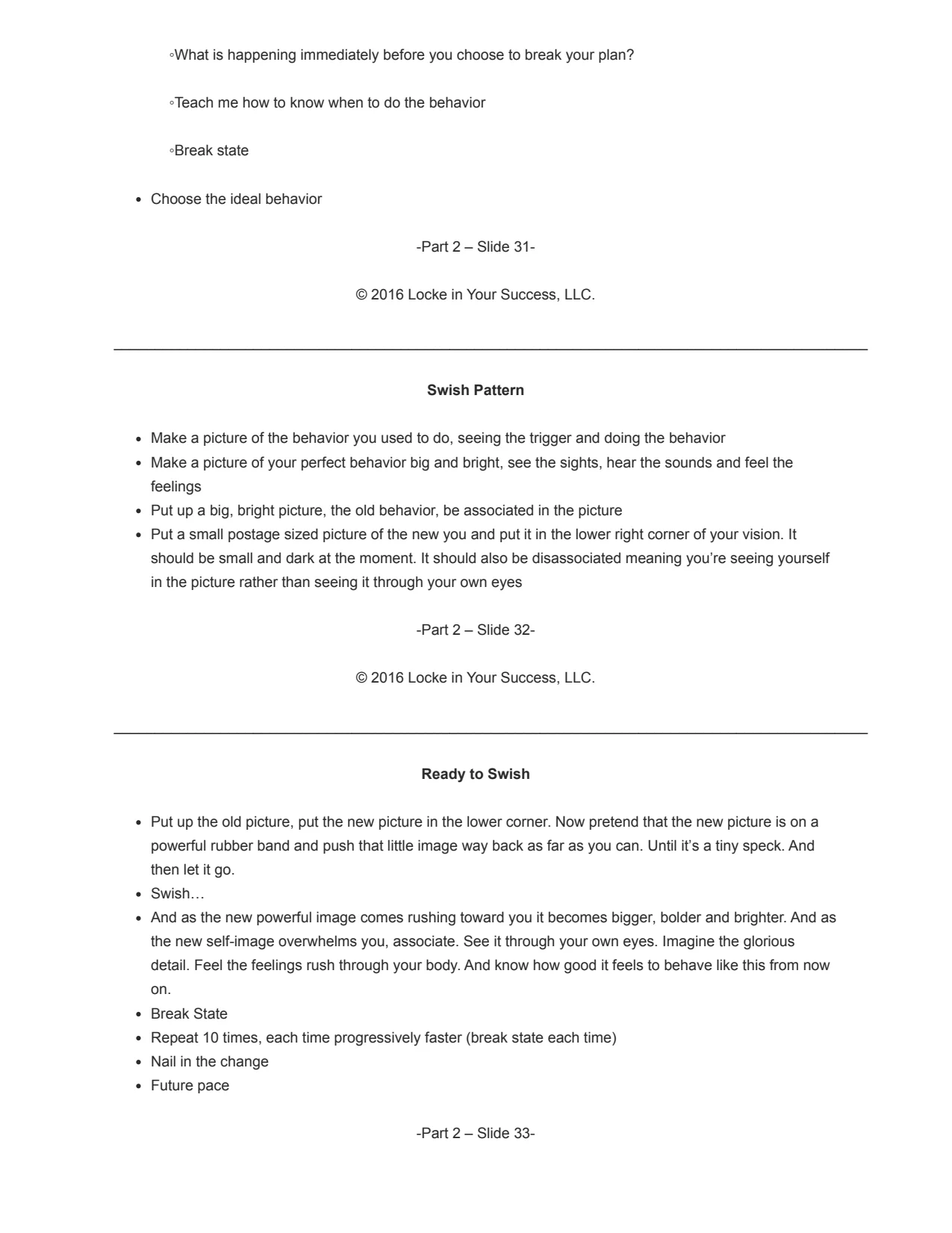
If your goals are not specific or aligned with your beliefs, you will not perform the necessary behaviors to achieve them. Belief in your plan and alignment with your identity are crucial for success in any area of life, including trading.
To create change, use guided imagery to access positive memories and emotions. This involves closing your eyes, recalling a time when you felt good, visualizing a mental image associated with that feeling, and interacting with it through physical actions such as touching and framing the image.
02 12:43 Guided Imagery and Coding Principles
The speaker guides the audience through physical movement and guided imagery to manipulate mental images. They then discuss individual differences in coding and how altering coding can change feelings, emphasizing the role of the unconscious mind as a CD player that responds to correct coding.
The unconscious mind uses a coding system to associate feelings, experiences, and memories with specific mental images, emotions, sounds, and physical sensations. This system determines how we feel about anything, including future or past events.
To change how you feel about something, you can alter the mental imagery, emotions, or physical sensations associated with it. This involves repositioning or modifying the mental picture, emotion, or sound linked to the experience.
03 15:37 Conscious vs. Unconscious Mind and Memory Formation
The speaker explains the distinction between the conscious and unconscious mind, highlighting how the unconscious mind operates continuously and lacks the ability to discern right from wrong. They also discuss how memories are formed, especially during early childhood, and how the conscious mind relies on these memories for decision-making.
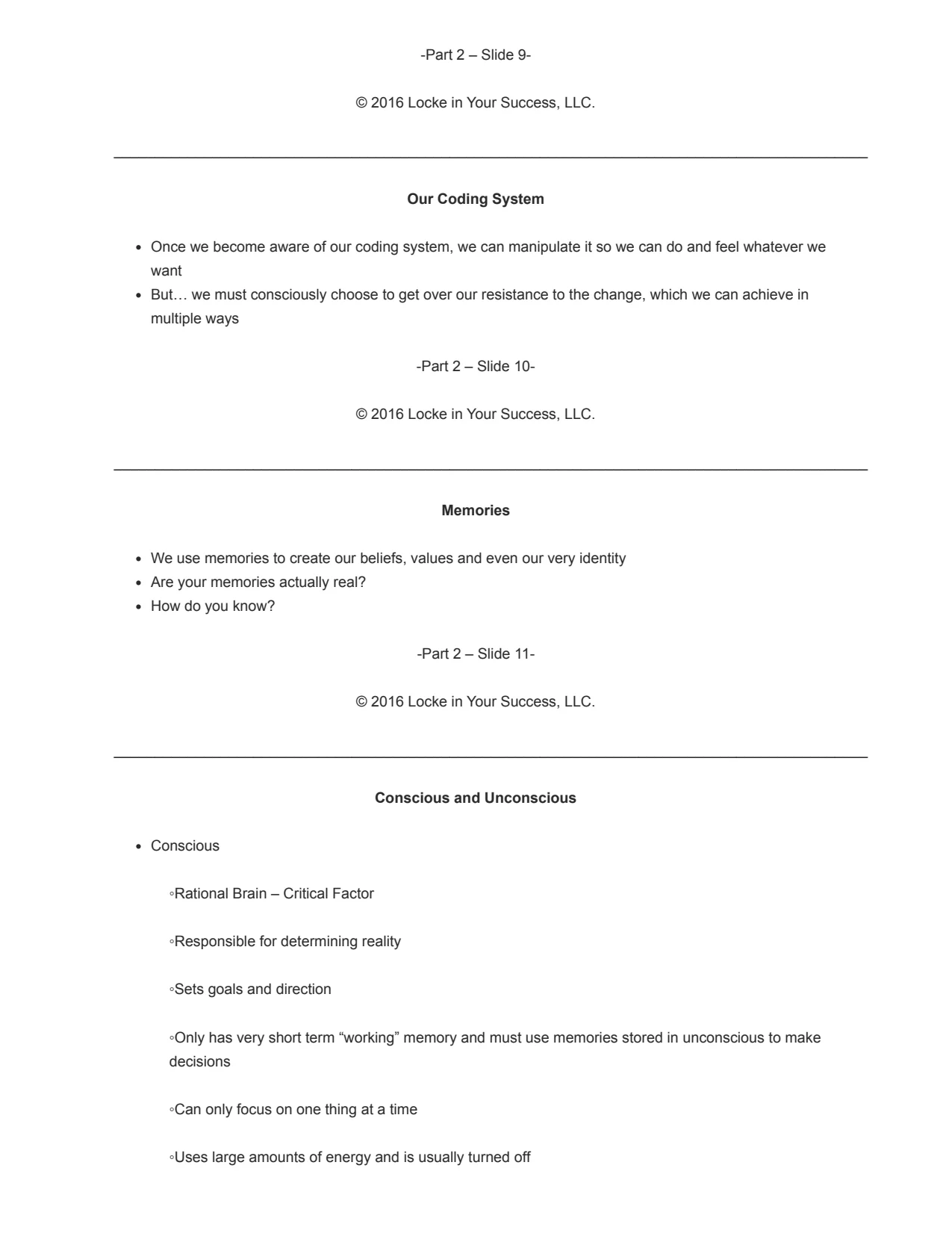
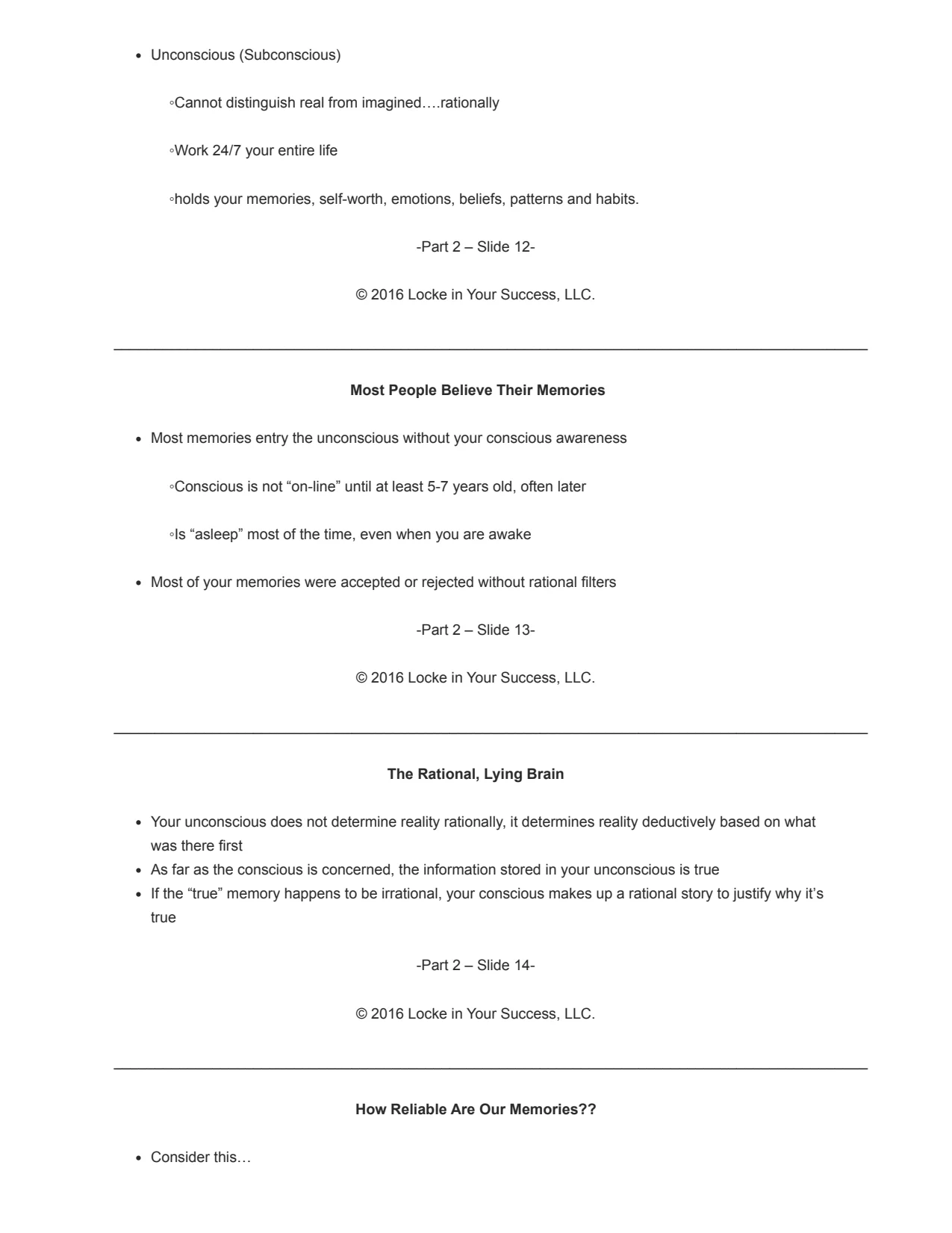
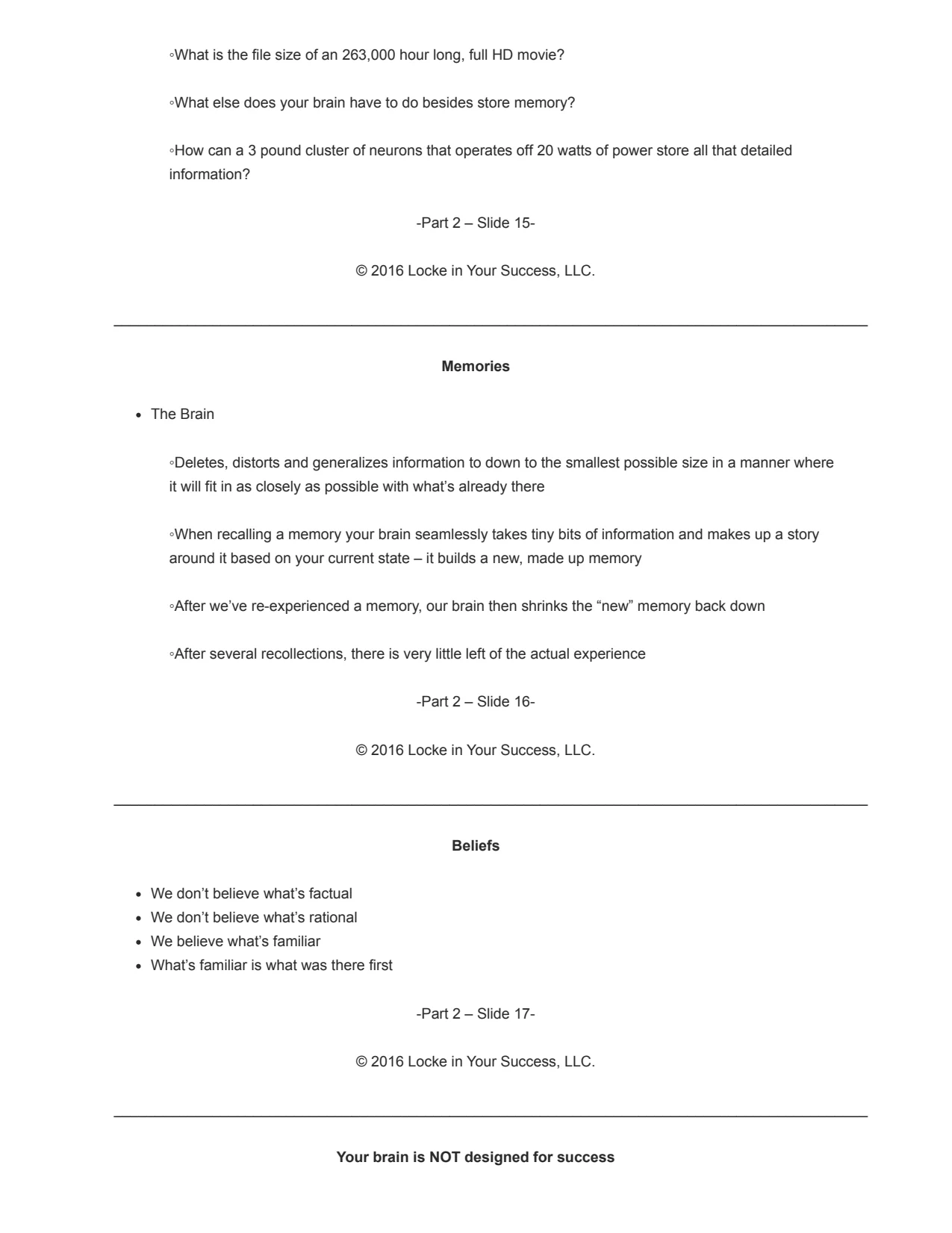
The conscious mind is responsible for rational decision-making and resolving conflicts in the unconscious mind, while the unconscious mind operates continuously and stores memories that influence decisions. The unconscious mind does not distinguish between imagination and reality unless taught to do so.
Memories are not stored in their original form but are compressed, altered, and reconstructed based on current feelings and interpretations. This can lead to the creation of fabricated memories that may not reflect reality.
04 26:59 Beliefs, Survival, and the Mind's Function
The chapters explore the nature of beliefs and how the mind is designed for survival rather than happiness. It discusses the survival mechanism of the mind, the role of the prefrontal cortex in changing beliefs, and the unconscious processing of information by the mind.
The mind was not designed for happiness or success, but for survival. It creates vivid, exaggerated mental images to ensure survival and reproduction, even if these images are not aligned with reality.
The prefrontal cortex allows individuals to disassociate from their thoughts, analyze their beliefs, and change them for personal benefit. Beliefs are not necessarily real and can be reinterpreted to serve one's needs.
05 33:22 Perception, Awareness, and Habit Formation
The chapters examine how perception is constructed by the brain, the limited awareness of the mind, and the role of anchors in habit formation. It also discusses the importance of sensory acuity in recognizing confidence and the need for small steps in learning and habit development.
People are often unaware of their surroundings due to the brain's efficiency in filtering information, leading to a limited awareness of what is actually occurring in their environment.
A method to improve awareness of one's environment by intentionally focusing on specific sensory inputs, such as color, to increase perceptual sensitivity.
06 39:14 Confidence Anchoring and the Role of the Unconscious Mind
This chapter covers the concept of confidence anchoring, including how to identify and use peak states of confidence, practice through imagery and self-reflection, and the importance of not stacking states. It also introduces the role of the unconscious mind in task performance and the concept of 'the zone' in achieving optimal performance.
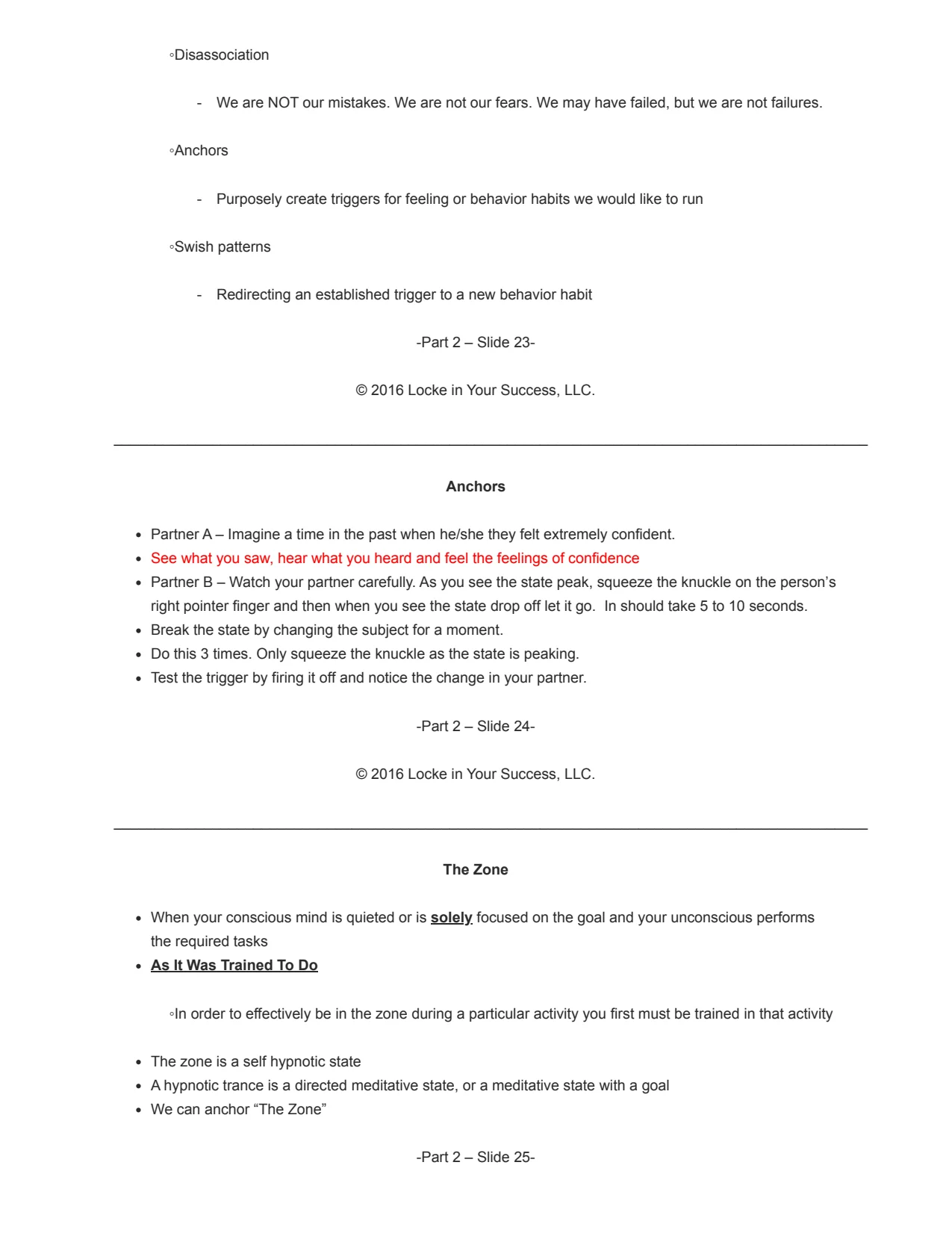
To reinforce confidence through imagery, imagine a specific time in your past when you felt confident. Visualize the sights, sounds, and feelings associated with that moment, and allow the confidence to build in your body. Repeat this process with another confident memory to strengthen the anchor.
To test and reinforce a confidence anchor, imagine a time when you were confident, and then double the feelings of confidence in your body. Observe the physical and emotional changes that occur as a result of this process.
07 45:08 The Zone in Trading and the Importance of Mental Preparation
This chapter discusses the concept of 'the zone' in trading, emphasizing the importance of focusing on the process rather than the result. It also covers the effectiveness of imagination practice, scenario training, and the consequences of not preparing mentally for various market conditions. The chapter concludes with an introduction to trading plans and the importance of adaptability.


Before entering a trade, imagine all possible outcomes and scenarios, including wins, losses, and catastrophic situations. Play through these scenarios in your mind repeatedly to train your unconscious mind to respond appropriately.
Traders should focus on the process of following a proven trading strategy rather than the outcome of individual trades. Focusing on the outcome can pull traders out of the 'zone' and lead to poor decision-making.
08 51:33 Trading Plan Complexity and Risk Management
This chapter covers the complexity of trading plans, the importance of discipline and plan adherence, the challenges of trading plans, and the necessity of responsible risk management. It highlights how even simple strategies require extensive planning and how traders must manage risks effectively to avoid significant losses.

To prepare for unexpected market events, traders should vividly imagine potential scenarios and their emotional responses, thereby training themselves to adhere to their trading plan even under pressure.
Traders should avoid exiting trades prematurely due to small gains, as this can lead to long-term losses and inefficiency in capital utilization.
09 59:38 Trance States and Anchoring Techniques
This chapter explores trance states and their common occurrence in daily life, the process of anchoring and entering trance states, directed daydreams for goal setting, and the concept of conditioning through examples like Pavlov's experiments. It emphasizes the importance of practice and intentionality in harnessing these mental states.
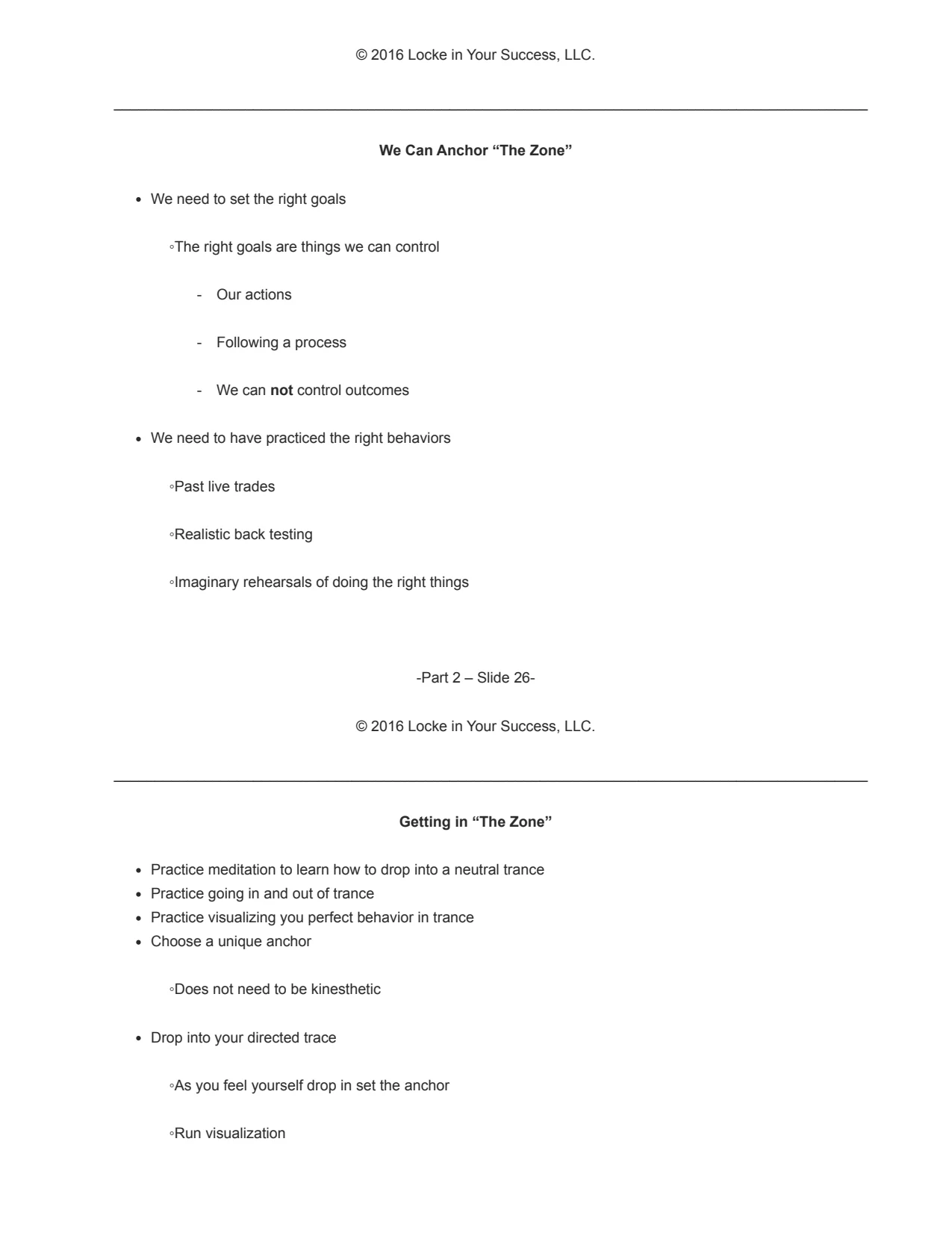
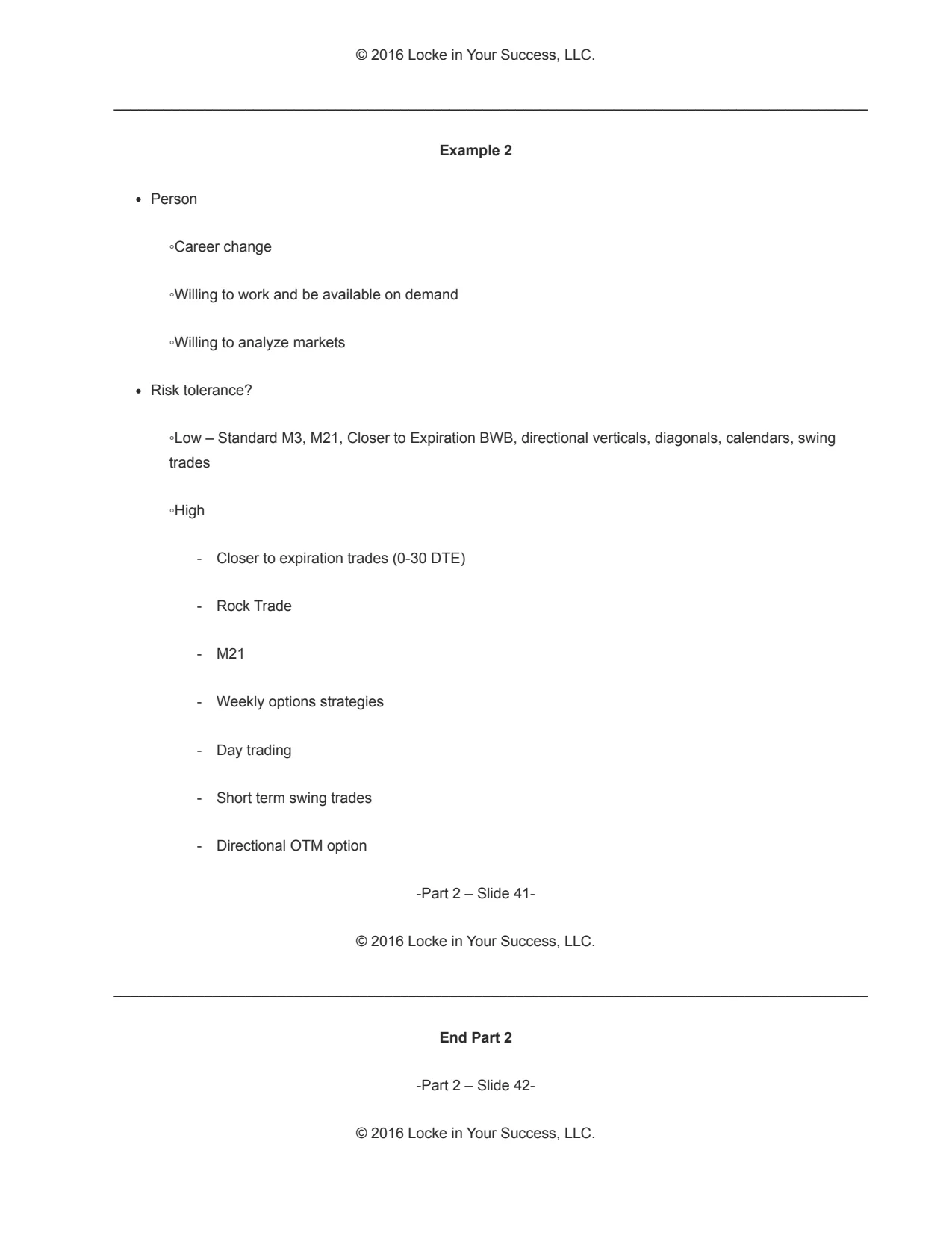
To enter a trance state, one should start with a neutral daydream or meditation, then anchor it by repeating the process of entering and exiting the trance state. This involves setting a goal, such as imagining a trade, and using a physical or mental cue (anchor) to trigger the trance state intentionally.
Anchoring can be used to condition a response by repeatedly associating a specific stimulus (e.g., a phone ring) with a desired action (e.g., answering the phone). This is similar to Pavlov's experiment, where a conditioned response is formed through repeated associations.
10 1:03:48 Creating and Using Anchors for Desired States
The chapter begins by explaining how to create anchors for desired mental states, such as power, through conditioning and repetition. It then explores how these anchors can be used to trigger desired states, emphasizing the role of imagination and past experiences. The discussion continues with the concept of power anchors, particularly in martial arts, and how focus anchors are used in traditional training to create a powerful feeling. The chapter highlights the universality of these concepts across cultures.
To create a power anchor, one should recall a specific time when they felt powerful, engage all senses to relive that experience, intensify the feeling, and then perform a physical action (such as closing the right fist) to anchor the feeling. This process should be repeated multiple times to reinforce the association between the physical action and the desired emotional state.
The body and mind are interconnected through a feedback loop, and changing physical posture can significantly alter emotional states. For example, standing tall with shoulders back and head up can create a feeling of power and confidence.
11 1:08:41 Managing Stress, Distractions, and Anchors
The chapter discusses the importance of shifting focus and body posture to manage stress and emotional states. It emphasizes the role of conscious focus in regulating emotions. The conversation then shifts to the use of external stimuli like music as anchors, highlighting how music can evoke specific emotional states. The final part of the chapter explores the impact of distractions and the environment on focus, noting that too many anchors can hinder concentration, especially in different settings like trading environments.
Use external stimuli like music as an auditory anchor to shift emotional states. Identify a specific song or sound that consistently evokes a desired emotional state (e.g., confidence or calmness) and use it to intentionally trigger that state during trading.
Avoid associating the trading environment (e.g., computer screen) with stress by separating trading activities from stressful stimuli. Use distractions or alternative environments to prevent the formation of negative emotional anchors.