Session overview
The speaker transitions to the main content by asking if anyone has a feeling of stress they want to change for laughing. When no one responds, the speaker invites Andre to come up and suggests that if he's laughing, it will work well. The speaker explains that to get stressed, one must see bad charts. They then mention that they will do the same thing, setting an anchor with Andre and setting it for a laughter anchor, which is the resource they want to go to. The session starts with a break, and the participant is told they can't do it. The instructor mentions that there's another situation that's even worse. The instructor asks the participant to think of a time when something was really funny and if they feel the feelings are funny. The participant responds affirmatively. The instructor asks the participant to break state and smell popcorn, then asks if they can do something like that
01 1:05 Stress, Laughter, and Auction
The speaker transitions to the main content by asking if anyone has a feeling of stress they want to change for laughing. When no one responds, the speaker invites Andre to come up and suggests that if he's laughing, it will work well. The speaker explains that to get stressed, one must see bad charts. They then mention that they will do the same thing, setting an anchor with Andre and setting it for a laughter anchor, which is the resource they want to go to. The session starts with a break, and the participant is told they can't do it. The instructor mentions that there's another situation that's even worse. The instructor asks the participant to think of a time when something was really funny and if they feel the feelings are funny. The participant responds affirmatively. The instructor asks the participant to break state and smell popcorn, then asks if they can do something like that
To create an emotional anchor, recall a specific past event that evokes a desired emotion (e.g., laughter) by engaging all senses (sight, sound, feeling). Repeat this process multiple times to reinforce the anchor.
In an auction, the highest bidder wins the item, while the second-highest bidder pays the highest bidder the amount of their bid. The process involves sequential bidding with increasing amounts.
02 12:42 Bidding Process and Post-Sale Discussion
The bidding process continues with participants discussing the reasons behind the stopping of bids at certain prices. The final bid of $36 is accepted as the sale price, and there is a post-sale discussion expressing confusion and curiosity about the process and decisions made.
The unconscious mind often lacks a clear understanding of when risk is good or bad, leading to irrational bidding behavior.
In a rigged game where participants bid on a $20 bill, some groups reached bids as high as $300, indicating irrational behavior driven by social dynamics and perceived value.
03 15:27 Decision Making and Confidence Building
The group discusses whether to cancel or continue the process, emphasizing fun and engagement. They then transition into a discussion about confidence building through sensory acuity, visualization, body language, and anchoring techniques in NLP. The session concludes with reinforcement of confidence and praise.
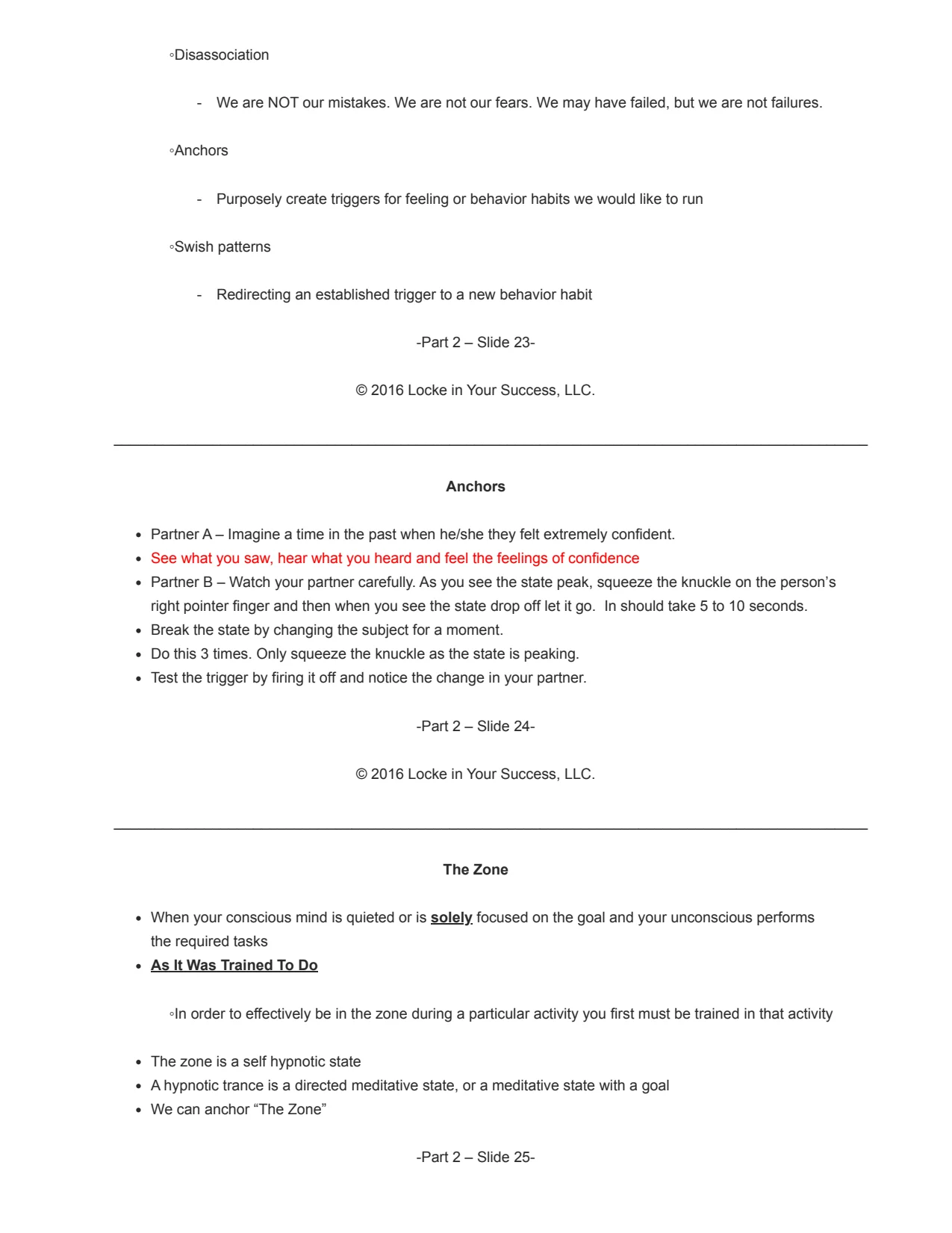
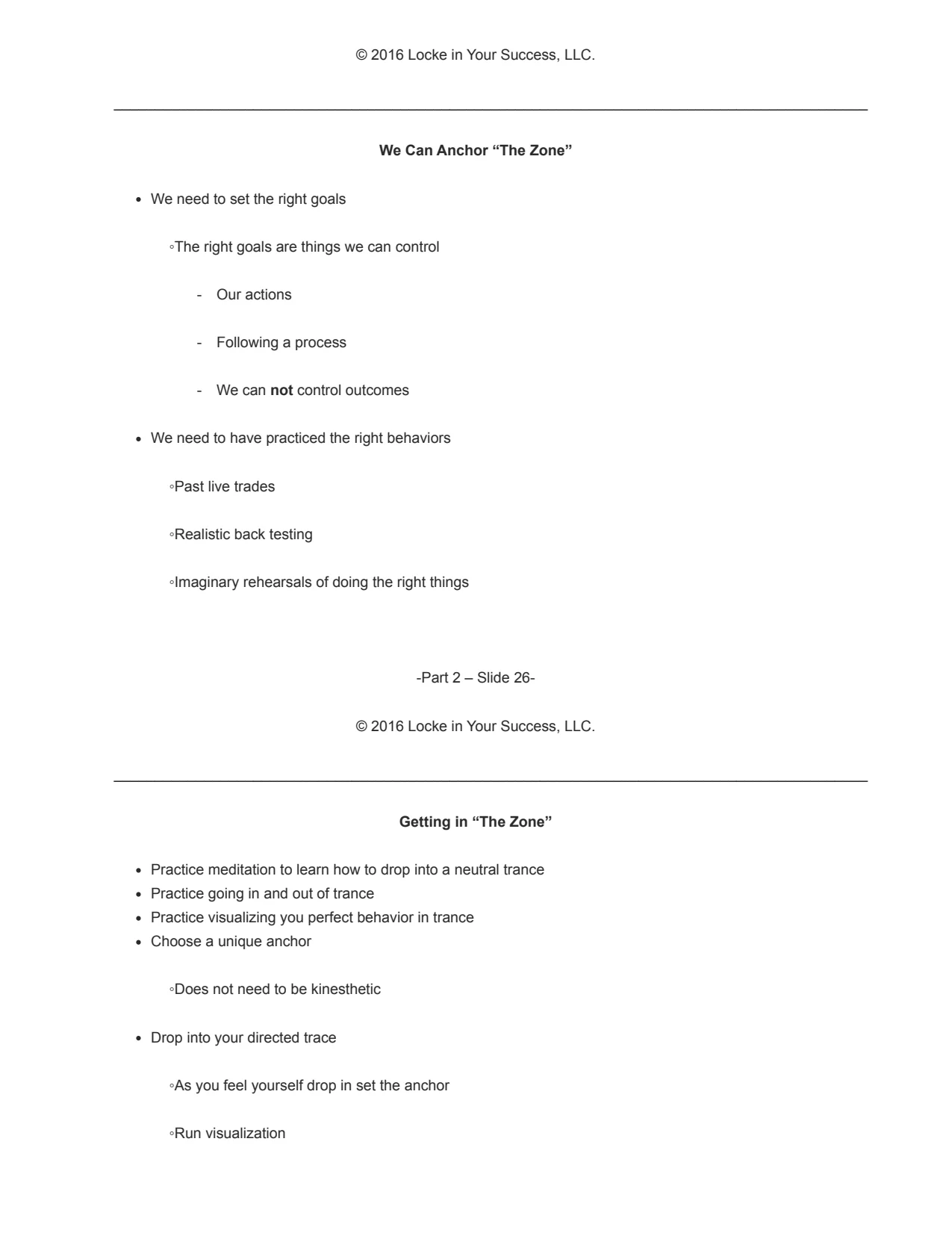
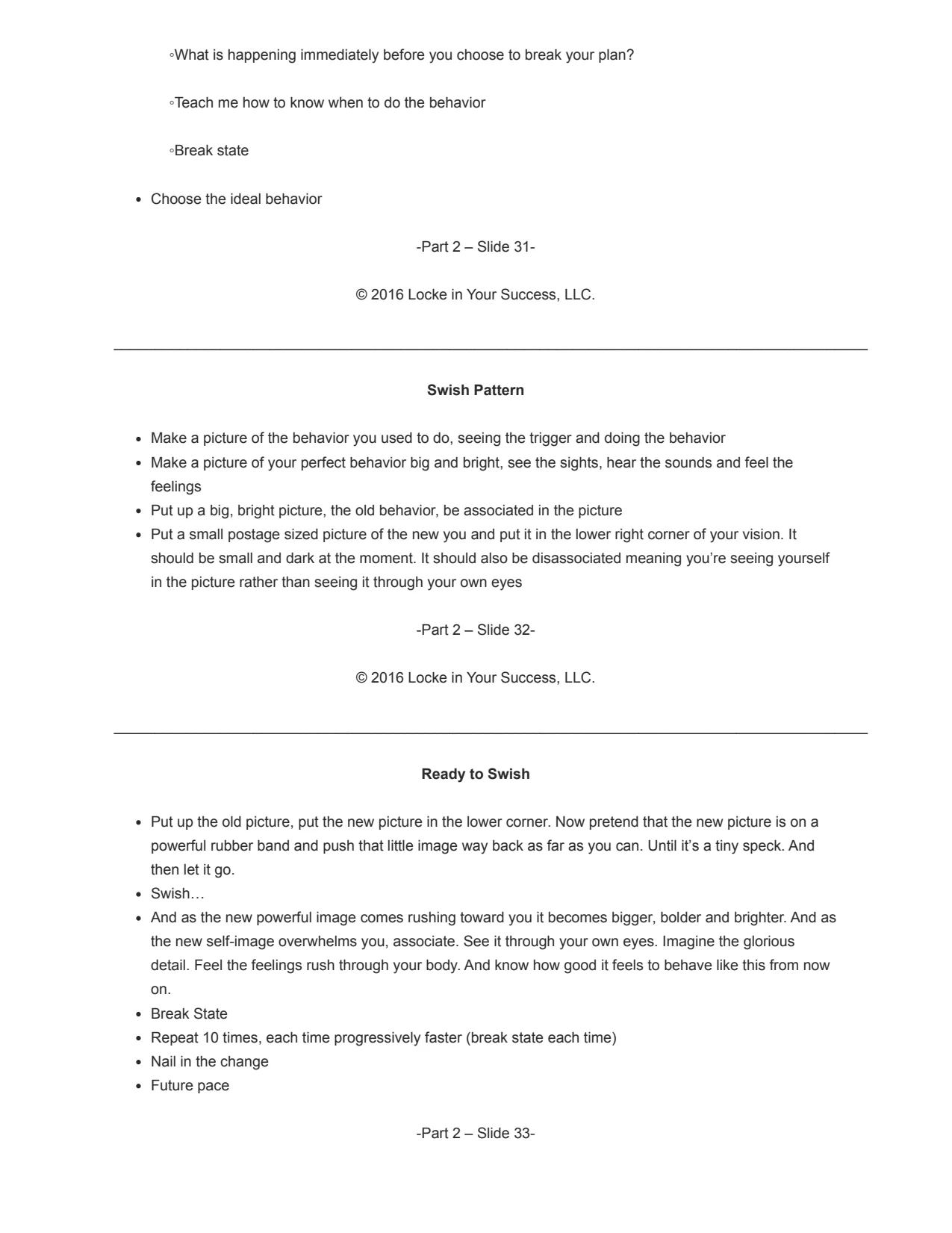
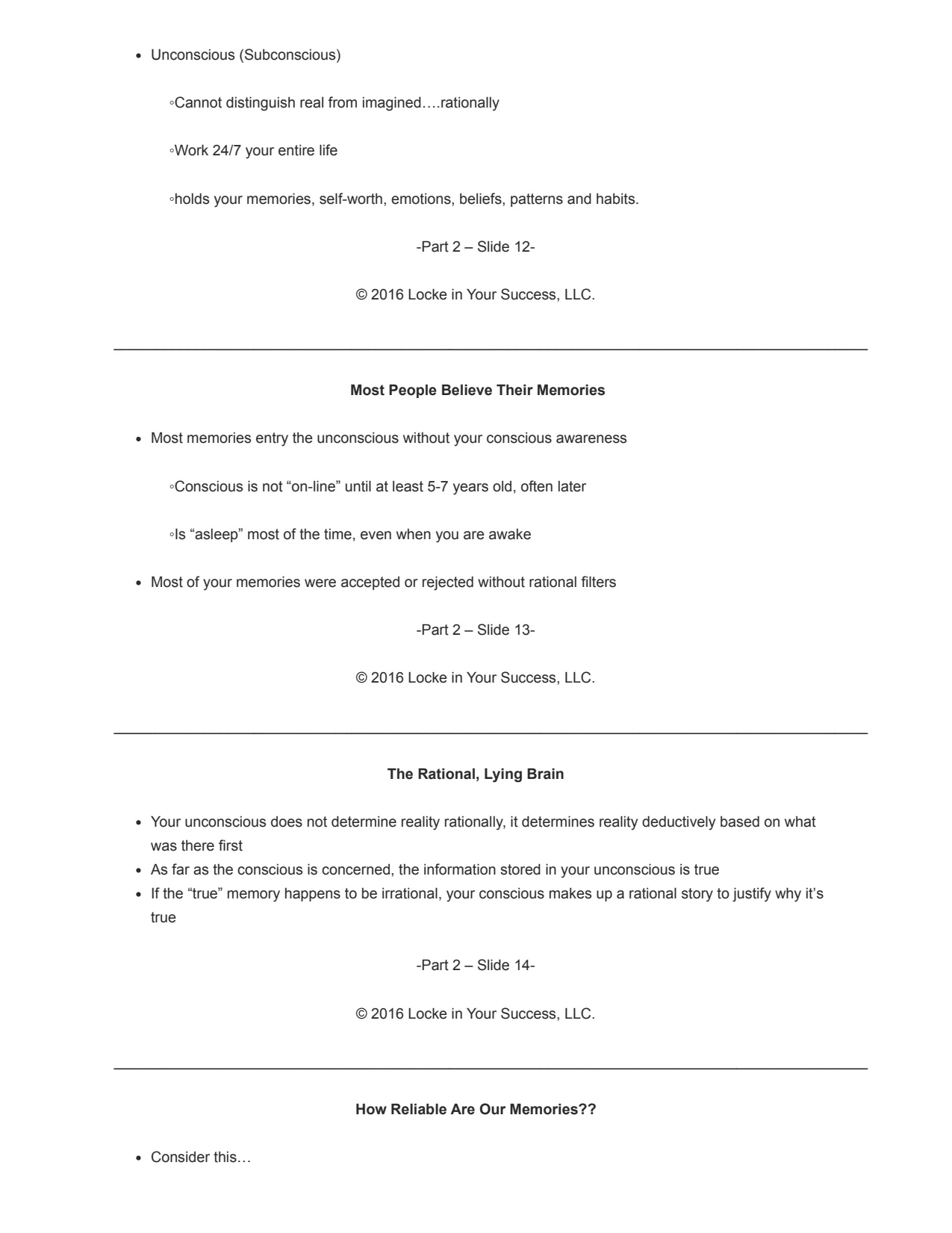
To set a confidence anchor, have a partner recall a time they felt confident, then use physical cues to reinforce that state. The process involves three steps: 1) Recalling a confident memory, 2) Using body language to embody confidence, and 3) Setting an anchor by repeating the physical cue to trigger the confident state again.
The frequency of feedback in trading significantly influences the choice of trading style. Traders who require frequent feedback are better suited for day trading, while those who can tolerate less frequent feedback may be more suited for long-term trading.