Session overview
The video transitions to the main content, discussing the importance of having a trading system for profitability and the role of visualization in the mind, including its connection to emotions, identity, and behavior change. It also covers techniques for overcoming negative self-perception and using triggers to maintain discipline in trading.
01 1:05 Trading Systems and Visualization Techniques
The video transitions to the main content, discussing the importance of having a trading system for profitability and the role of visualization in the mind, including its connection to emotions, identity, and behavior change. It also covers techniques for overcoming negative self-perception and using triggers to maintain discipline in trading.
Negative self-talk, such as 'I'm stupid' or 'I'm bad at math,' can shape self-perception and performance. Repeated negative statements with emotion can override positive evidence and create a self-fulfilling prophecy. It is crucial to differentiate between making mistakes and identifying as a failure.
Visualization is a technique used to change behavior by creating mental pictures of desired outcomes. This involves creating a dissociated picture of the desired behavior and a picture of the old behavior, then using a rubber band to 'blast through' the old behavior and reinforce the new behavior.
02 13:13 Smashing Old Behavior and Creating New Mental Pictures
The chapter begins with the process of smashing old behavior with a new image, where the new image overwhelms the person with pride. It then moves on to creating a new mental picture and testing it, outlining steps for making a new picture and testing it in the future.
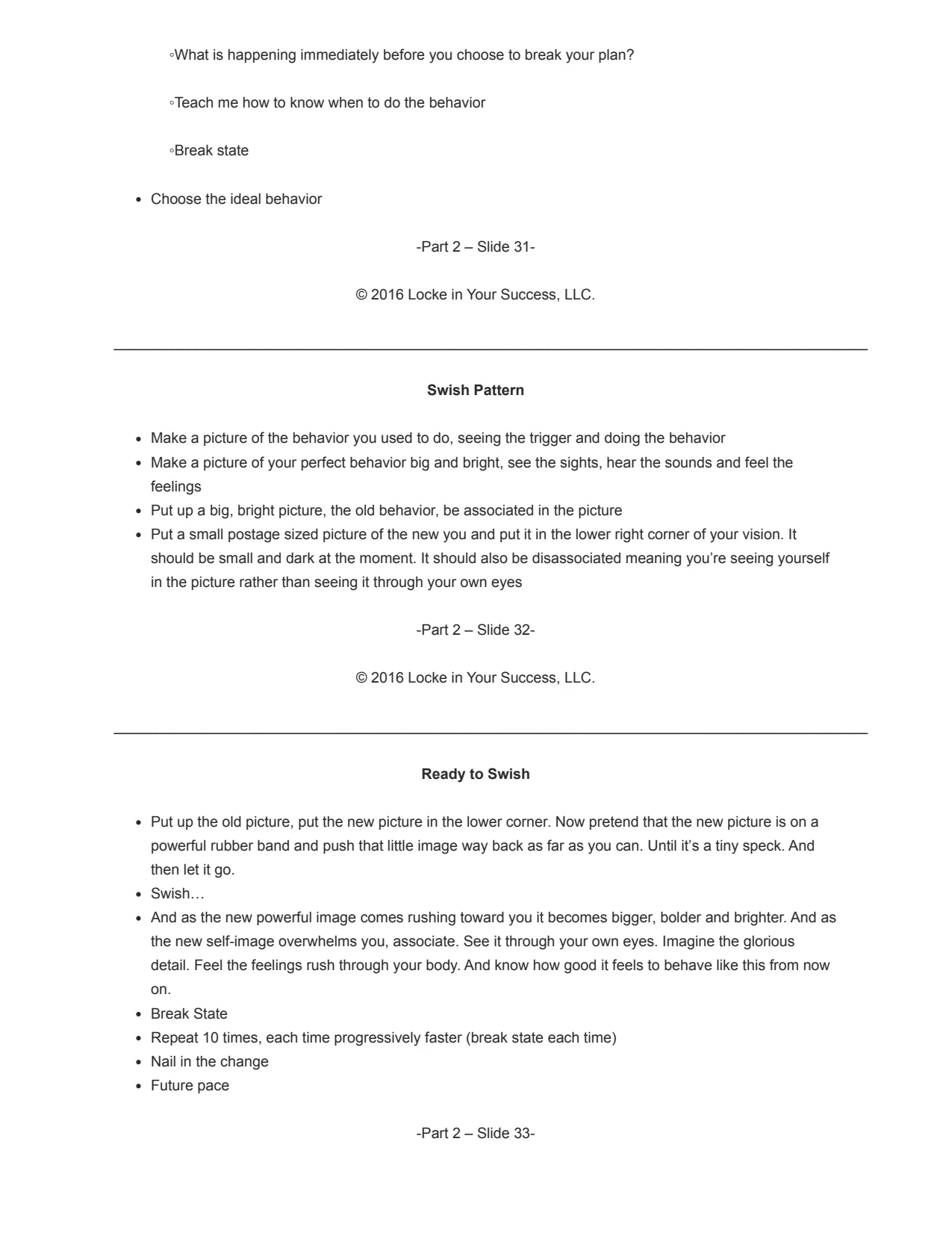
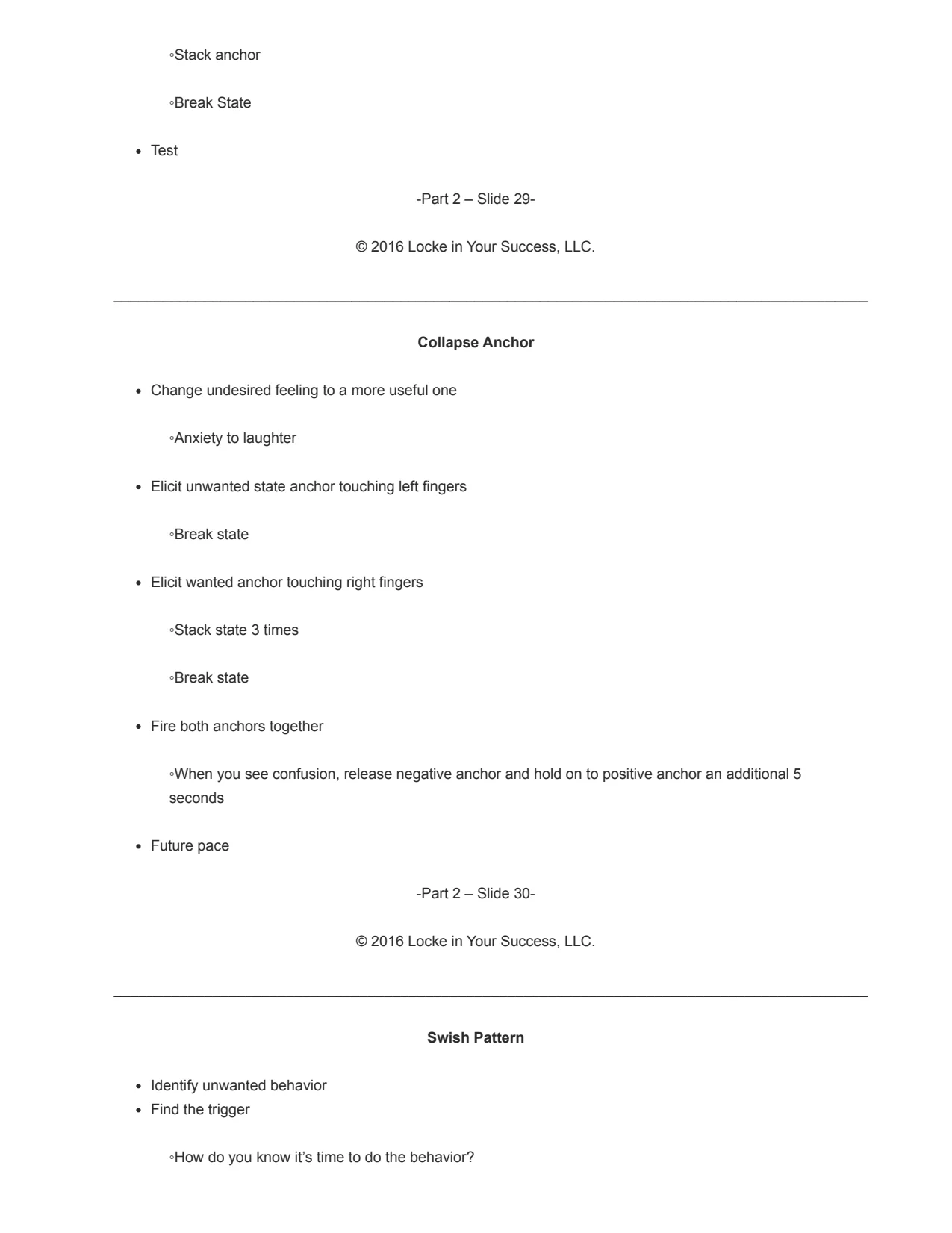
To replace an old behavior with a new one, visualize the new behavior as a powerful rubber band, push the old image back, and let the new image 'smash' the old one. Repeat this process 10 times, increasing speed each time, until the new behavior becomes automatic when the old trigger is encountered.
To replace an old behavior, first identify the trigger that initiates the behavior. Then, create a new behavior and test it by visualizing the new behavior and repeating the 'swish' pattern until the new behavior becomes automatic.
03 15:16 Behavioral Change Through Trigger Identification and Value Shifts
The chapter discusses imagining future scenarios where past behaviors are replaced with new, positive actions, focusing on changing behaviors through mental preparation. It then covers trigger identification, alternative actions, and the impact of stress and emotional triggers. The discussion continues with changing thought patterns, value shifts, identity changes, and the use of triggers for behavior modification and confidence.
Emotional triggers in trading often begin before the trader even looks at their computer, such as anticipating negative outcomes based on prior experiences or beliefs. These triggers can lead to stress and poor decision-making.
Traders can utilize existing triggers to change behavior by identifying the initial trigger and replacing the associated behavior with a desired one.
04 26:31 Hypnotism, Misconceptions, and Therapeutic Storytelling
The chapter begins with an introduction to hypnotism and the concept of triggers, addressing common misconceptions about hypnosis. It then explores how language and consciousness play a role in hypnosis, followed by discussions on layering information through stories and metaphors. The chapter concludes with an exploration of Milton Erickson's use of storytelling in hypnotherapy to effect behavioral change.
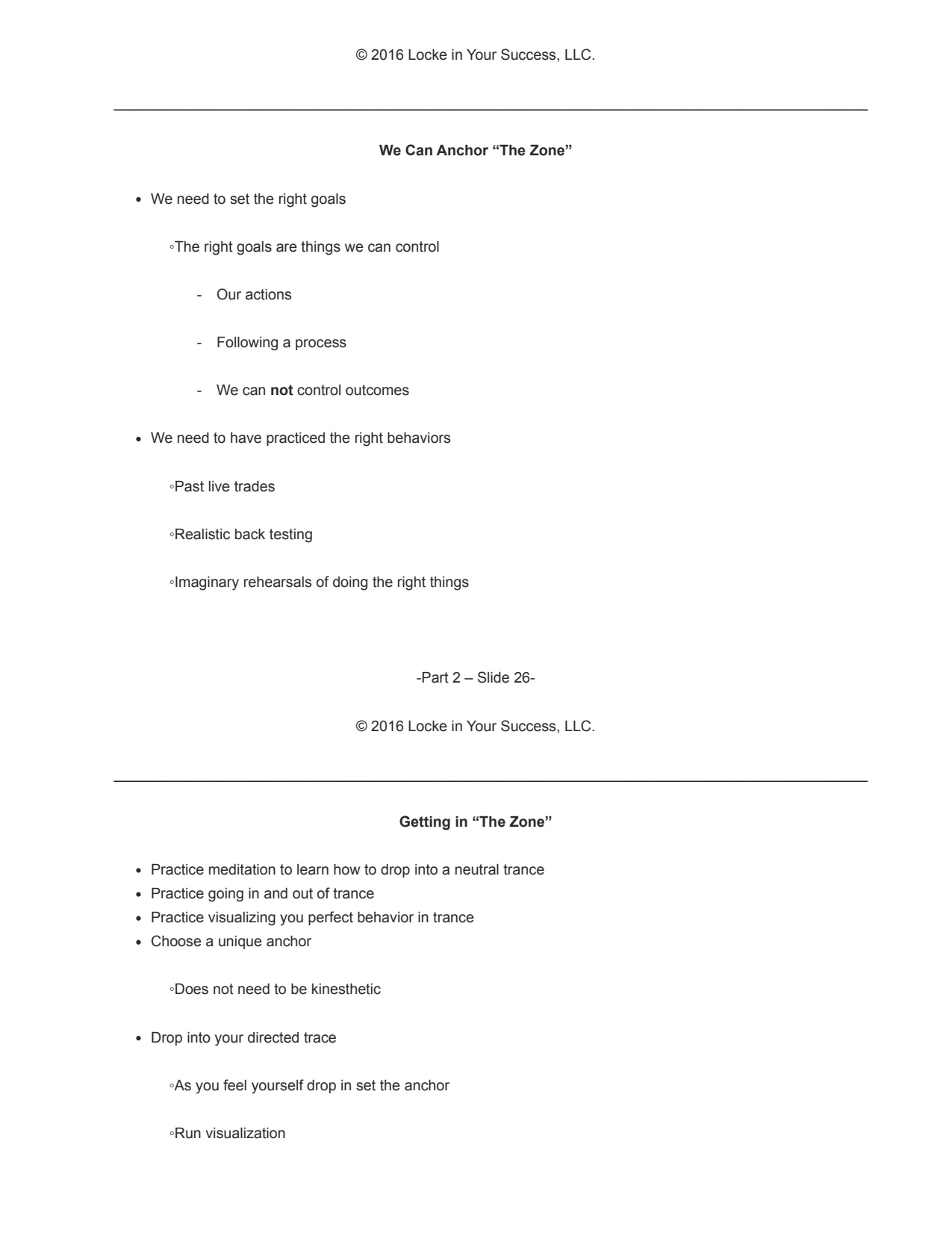
During hypnosis, the conscious mind may become confused or distracted, allowing the unconscious mind to absorb embedded commands or suggestions. This process is facilitated by using confusing language or layered storytelling, which shifts focus away from the conscious mind.
Behavior change can be achieved through storytelling, where the unconscious mind absorbs embedded messages. This method involves layering stories, metaphors, and embedded commands to influence behavior without direct instruction.
05 32:30 Trance States, Stress, and Relaxation Techniques
This chapter discusses the relationship between the conscious and unconscious mind, explaining how trance states can be induced through activities like reading or trading. It also covers how stress affects the mind, leading to unconscious responses, and explores various relaxation techniques, including the use of music and triggers to achieve a relaxed state. Environmental conditions and personal preferences are also briefly mentioned.
The conscious mind shuts down during trance states, allowing the unconscious mind to process information and focus on specific tasks. This is observed in activities like reading, trading, and even listening to music.
Music can be used as a trigger to induce a specific state of focus and relaxation, which is beneficial for trading.
06 38:54 Disassociation and Self-Reflection in Trading
The chapters discuss the use of disassociation to manage stress and emotional states during trading, as well as the importance of self-reflection and reframing situations for personal benefit.
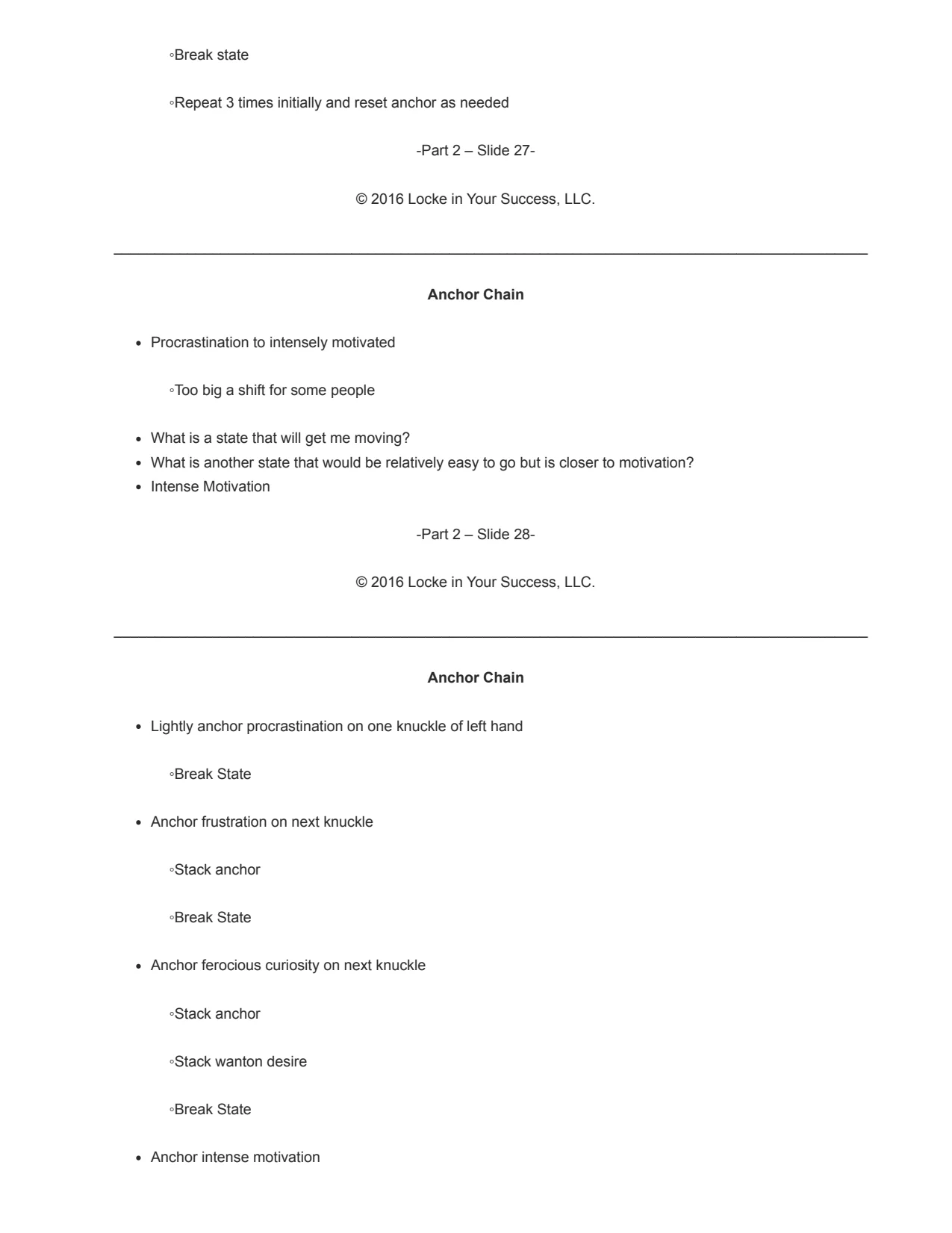
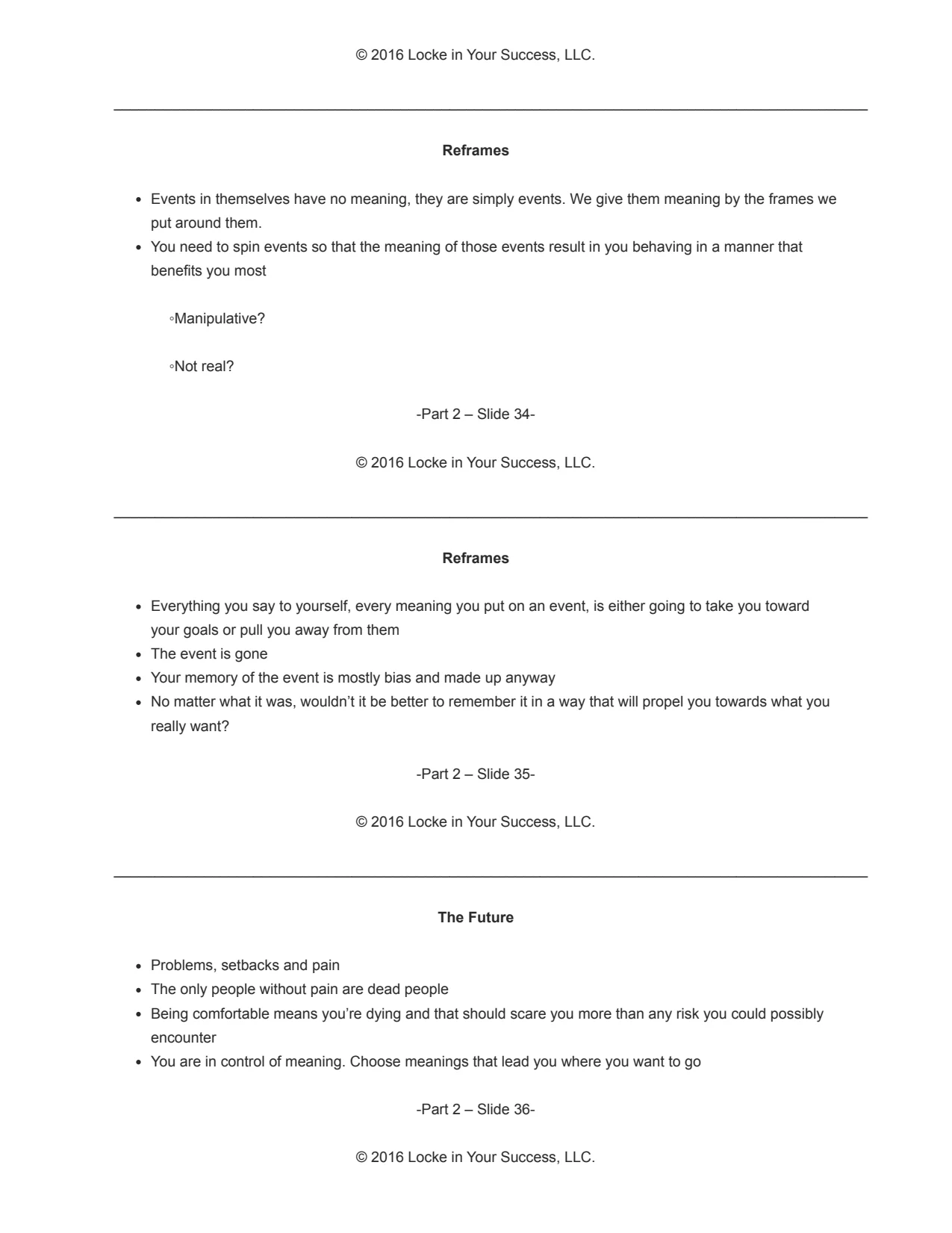
To manage stress in trading, disassociate from oneself by observing the trading activity as an observer. If stress remains high, use a third-person perspective to observe oneself trading. This process helps reduce fear and allows the logical center to reengage. If a trigger is not working due to high stress, back out of the situation, tag the trigger, and then re-enter with a predetermined plan.
Events themselves have no inherent meaning; meaning is applied through the frame we choose. Reframing events to benefit oneself is a valuable skill, even if some may view it as manipulative.
07 41:35 Goal Setting, Growth, and the Value of the Journey
The chapters emphasize the importance of focusing on desired outcomes, reframing experiences for growth, embracing challenges, and understanding the value of the journey over the destination. They also touch on the importance of clear goals and the role of memories in the process.
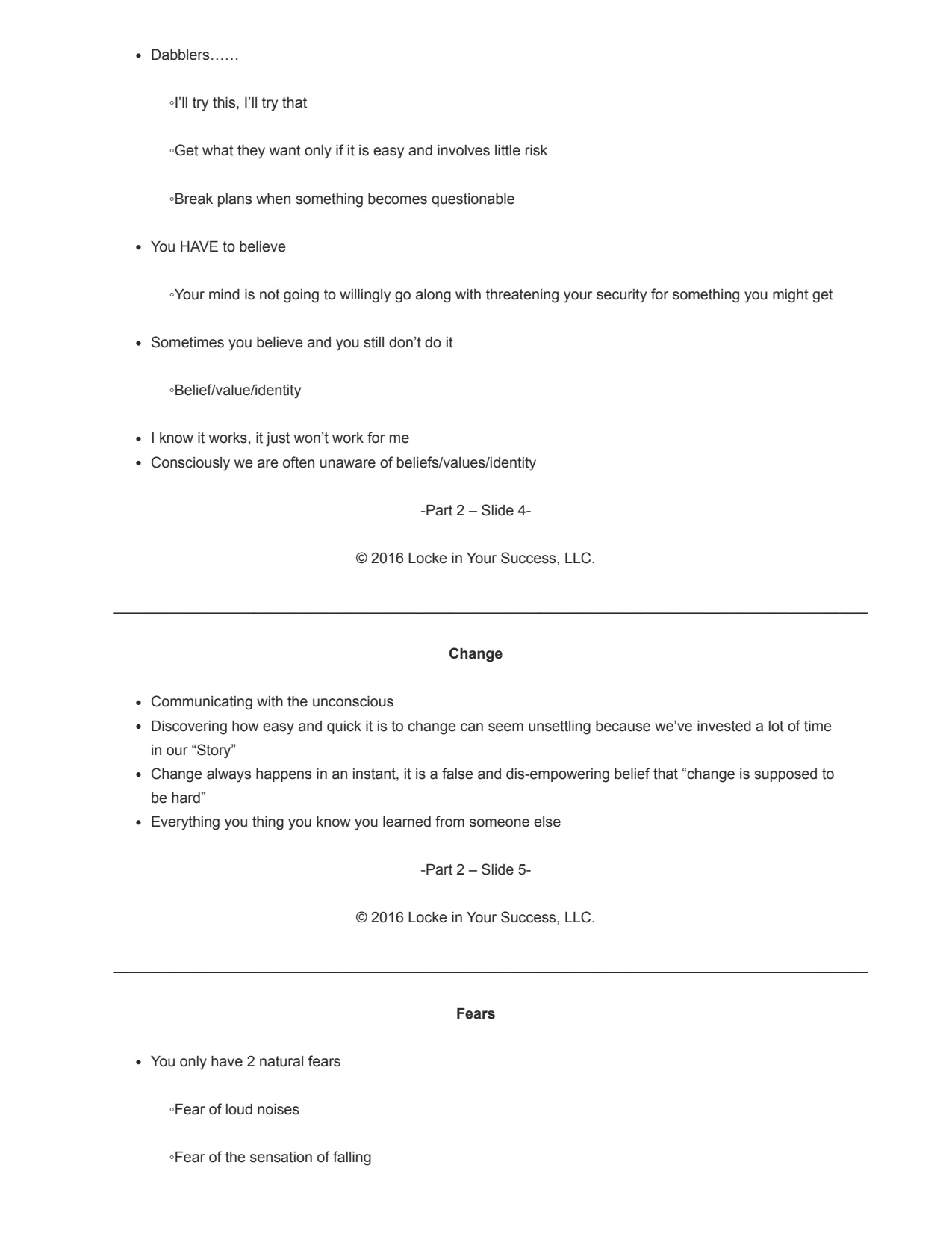
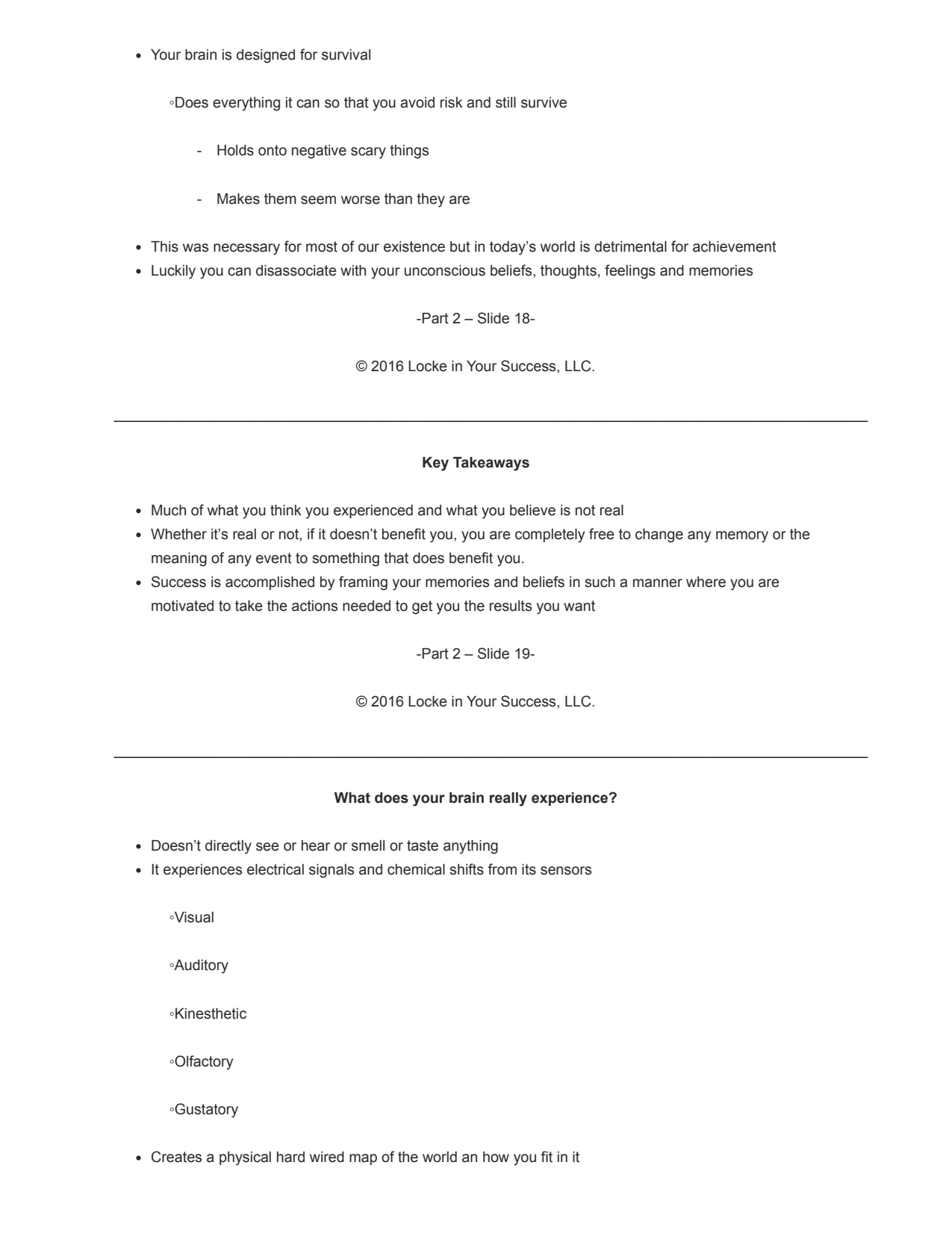
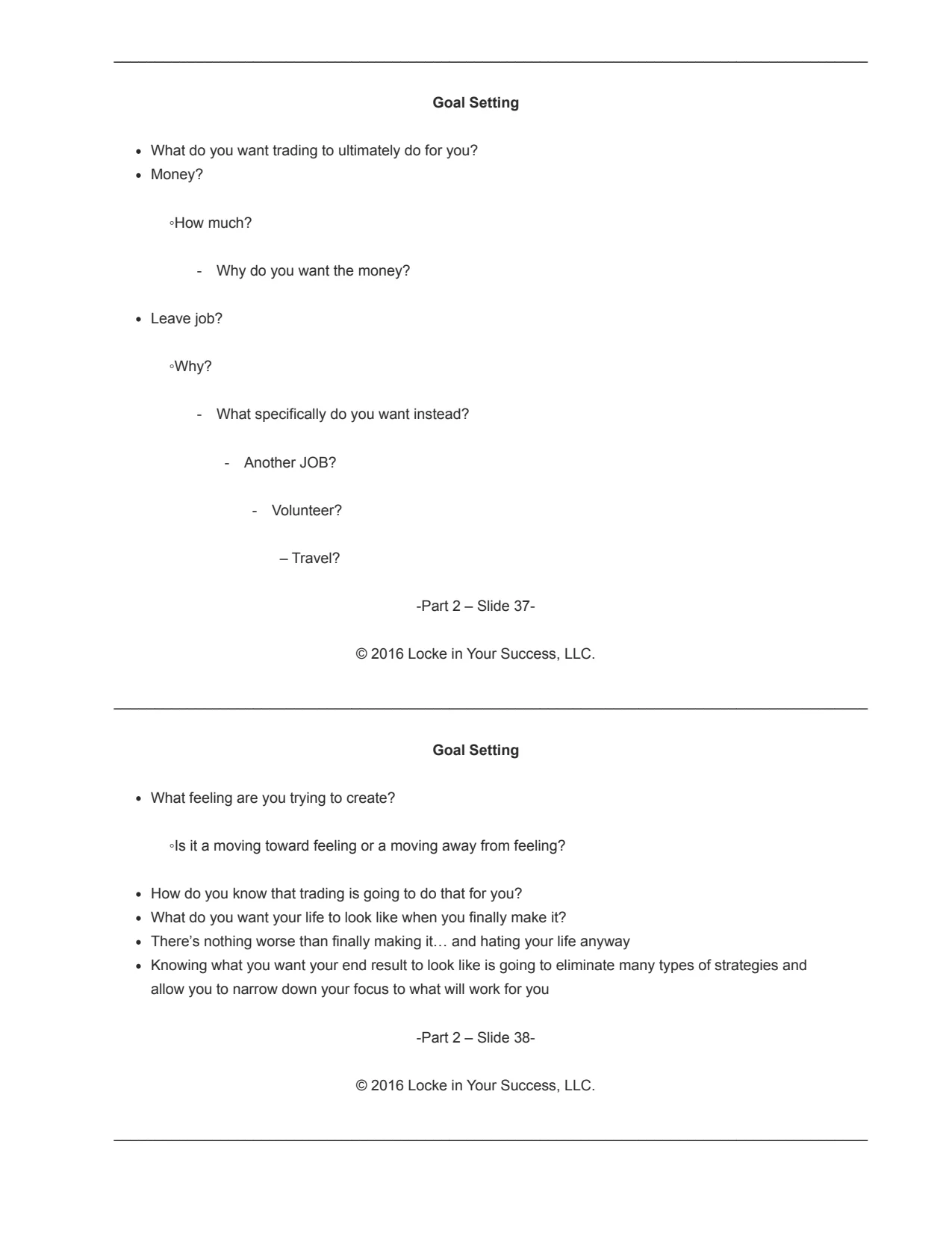
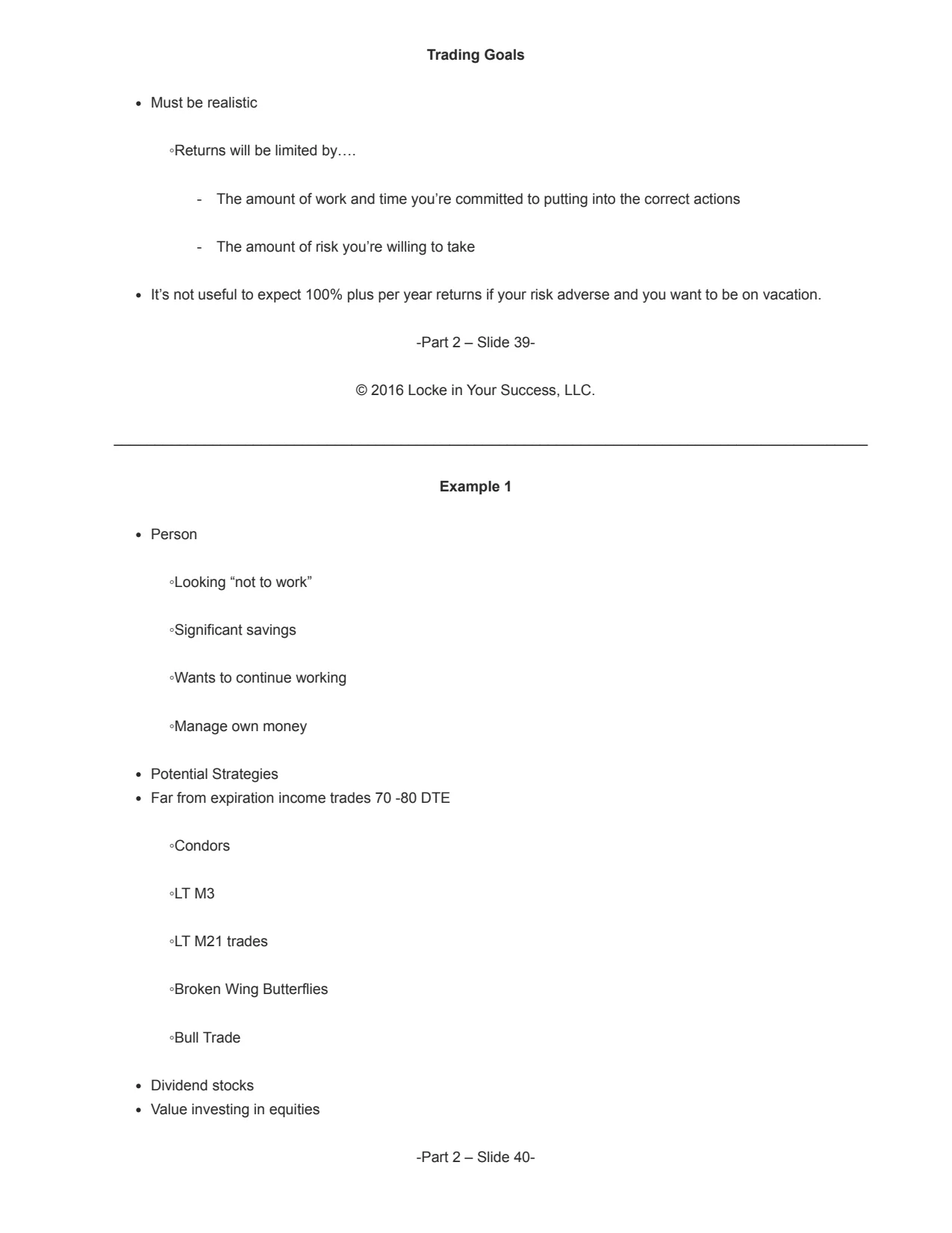
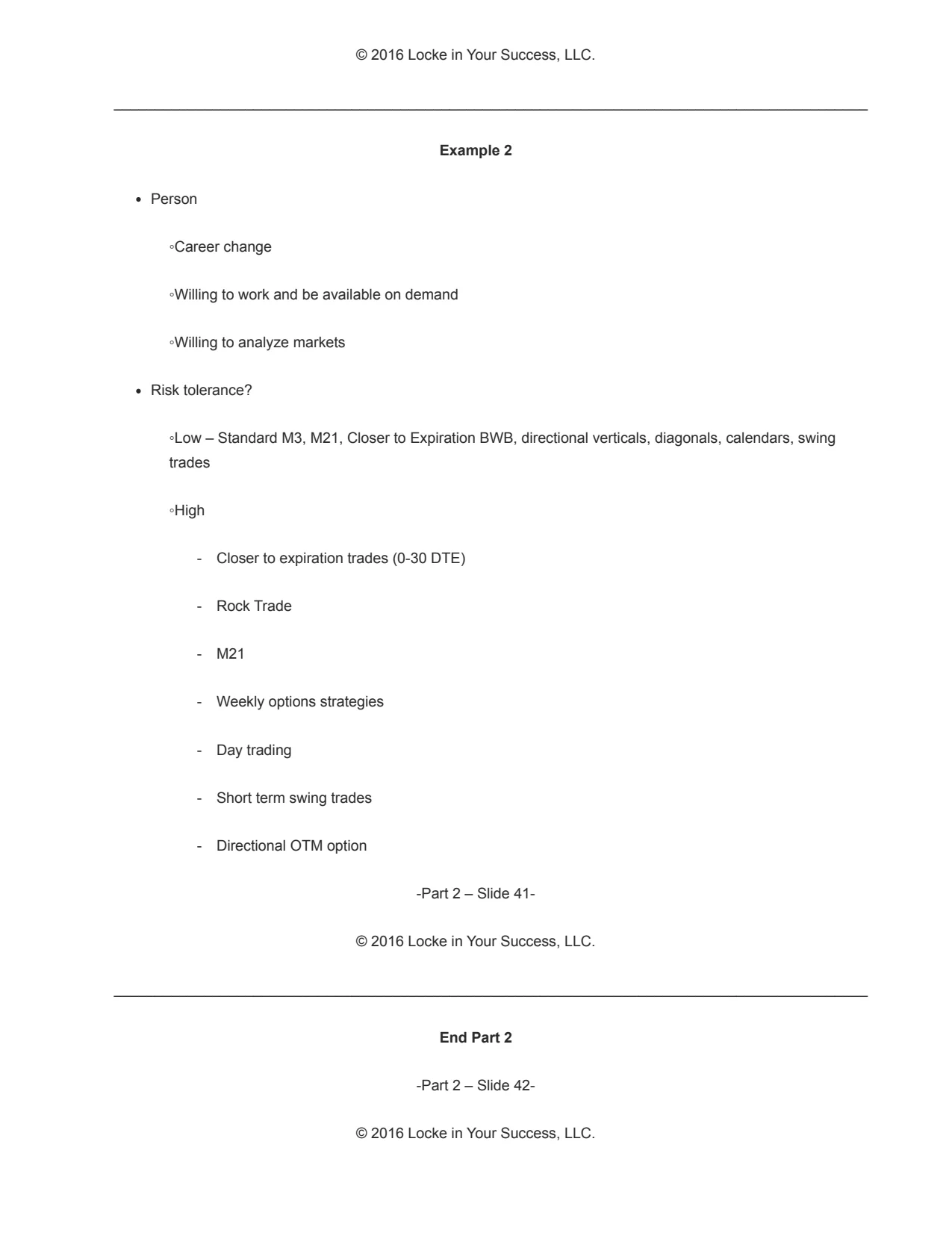
Maintaining a focus on desired outcomes and reframing experiences to foster growth is essential for success in trading and life. Identifying oneself as a failure leads to negative behaviors and outcomes, while embracing challenges and viewing failures as opportunities for growth can lead to personal and professional development.
Clear goals are essential for success in trading and life, but the journey itself is where the true value lies. Focusing on the journey rather than just the destination leads to long-term satisfaction and growth.
08 53:21 Conflict Between Risk Aversion and Fast Feedback in Trading
The speaker discusses the conflict between risk aversion and the need for fast feedback in trading, explaining how this combination can lead to constant monitoring and long-term issues. They also highlight the challenges of trading with long-term expirations and the anxiety associated with market fluctuations.
A trader who is risk-averse and requires fast feedback will face challenges because constant monitoring and active involvement in the market are detrimental to long-term trades.
Traders must align their feedback requirements with their risk tolerance when selecting a trading system.
09 55:02 Portfolio Allocation and Trading Objectives
Raymond and Steven ask about the possibility of allocating portfolios to multiple trading instances without creating conflicts, provided the trader identifies their objectives.
Allocate portfolios to different trades based on identified objectives, such as long-term vs. short-term strategies, to avoid conflicts in feedback and execution.