Session overview
The video discusses the need for mastery in trading, emphasizing the importance of training, experience, and productive practice. It covers the differences between income trading and regular trading, the journey to income trading, back trading, time investment, and the comparison of trading experience to home inspection. The video also explores the importance of mindset, financial planning, and the consequences of a scarcity mindset in trading.
01 1:49 Mastery, Experience, and Mindset in Trading
The video discusses the need for mastery in trading, emphasizing the importance of training, experience, and productive practice. It covers the differences between income trading and regular trading, the journey to income trading, back trading, time investment, and the comparison of trading experience to home inspection. The video also explores the importance of mindset, financial planning, and the consequences of a scarcity mindset in trading.
To achieve mastery in trading, one must dedicate 10,000 hours of training, practice, and experience, similar to other fields requiring expertise.
Productive experience in trading is defined as actual practice that follows a strategy, considering technical analysis, personal biases, and news events, rather than passive screen watching.
02 12:41 Trading Methodology and Business Setup
The speaker discusses the importance of a reliable trading methodology with a track record, the need to understand system limitations and market phases, and the hidden costs of transitioning to trading as a business. They emphasize the necessity of backup systems, office setups, and budgeting for additional business expenses.
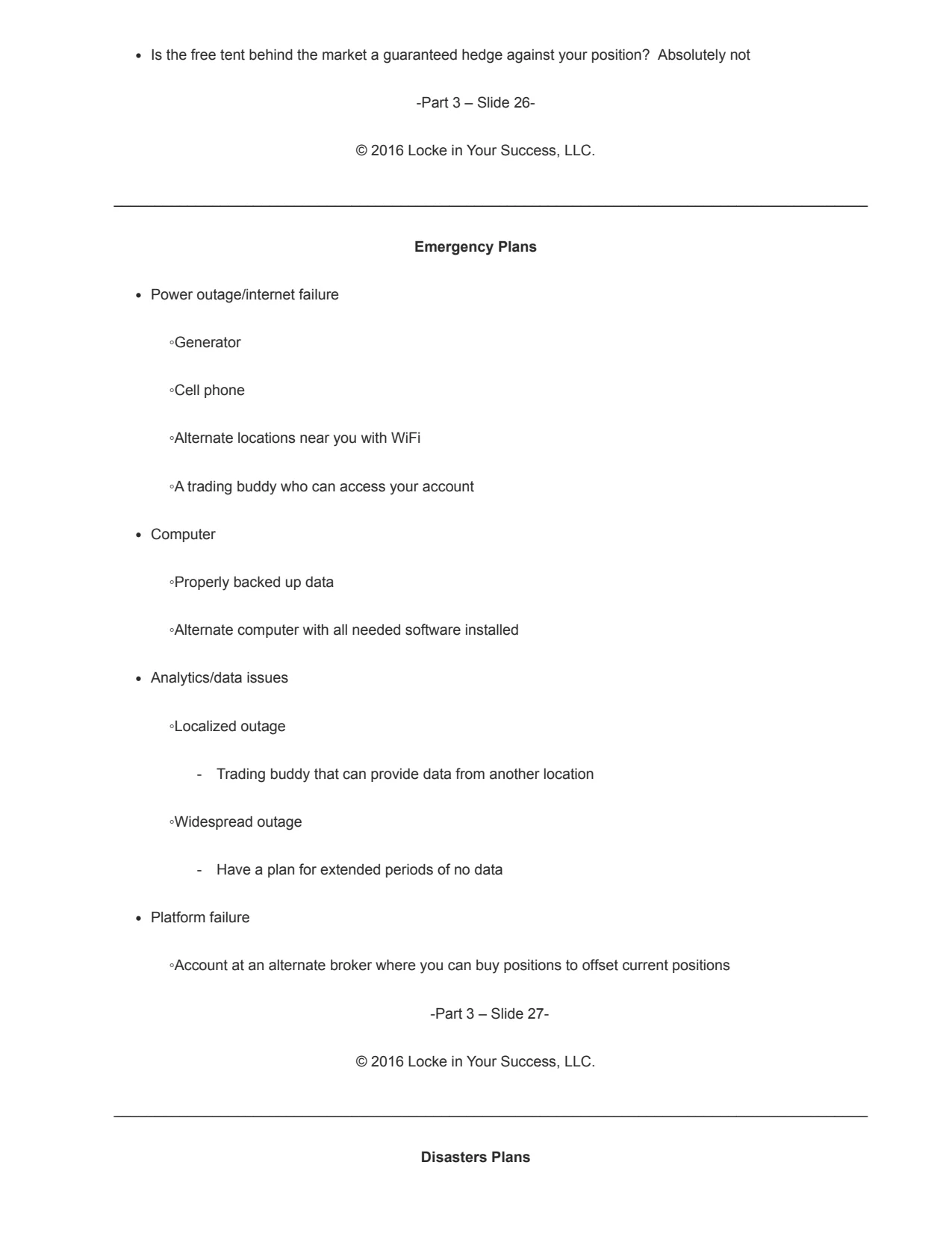
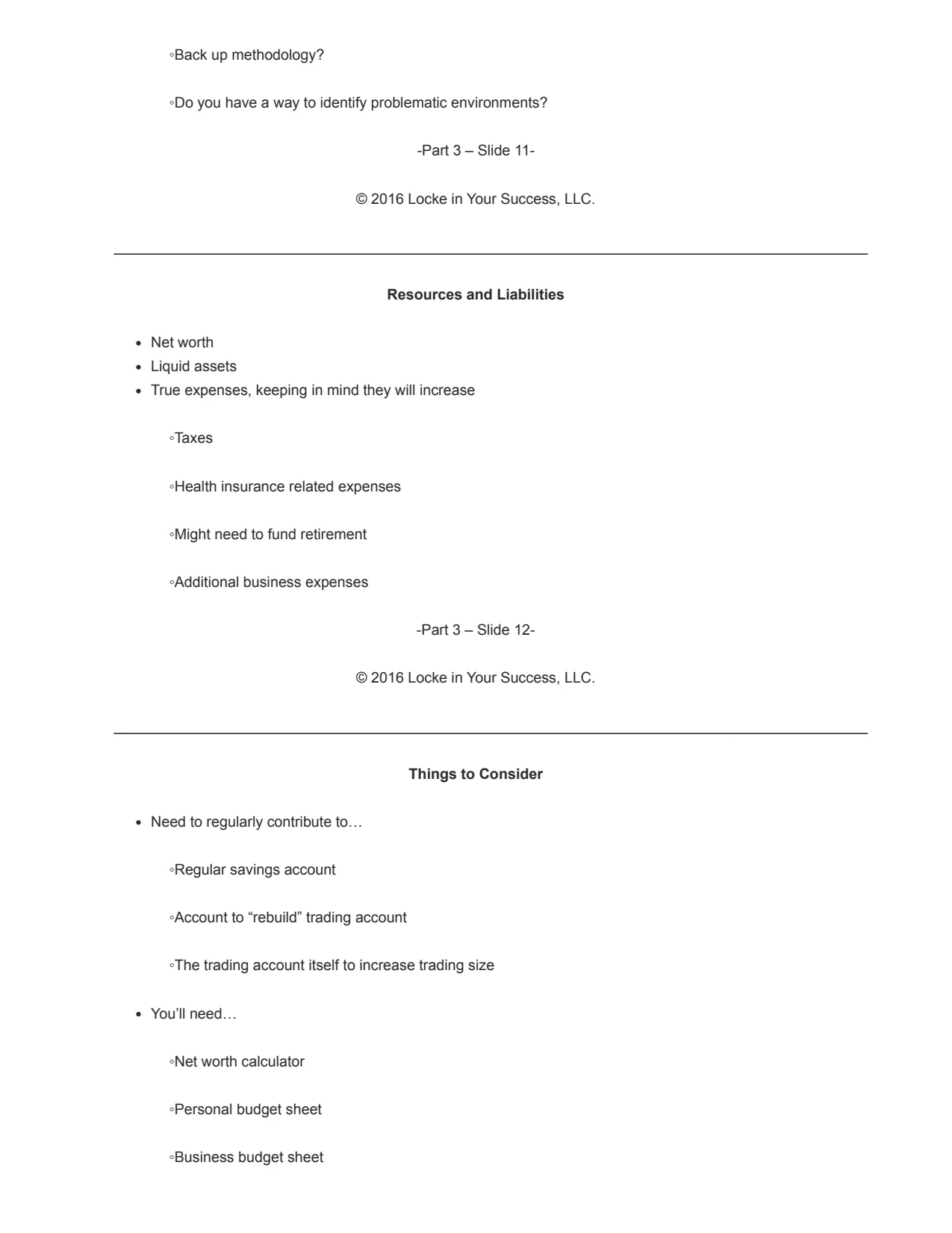
A reliable trading methodology is essential for success, and it must have a track record of performance through live testing, not just backtesting. It is crucial to understand the limitations and weaknesses of the system, as no system works indefinitely.
To evaluate a trading system, one must identify when it is likely to fail, understand the market phases where it is not appropriate, and have a plan for adapting or switching methodologies during those periods.
03 17:48 Financial Planning and Personal Expenses
The speaker explores the financial aspects of trading, including increasing trading account size, the psychological insights from net worth, and the individual's financial situation. They discuss the importance of saving, having cash on hand, and planning for college expenses, retirement, and car replacement funds.
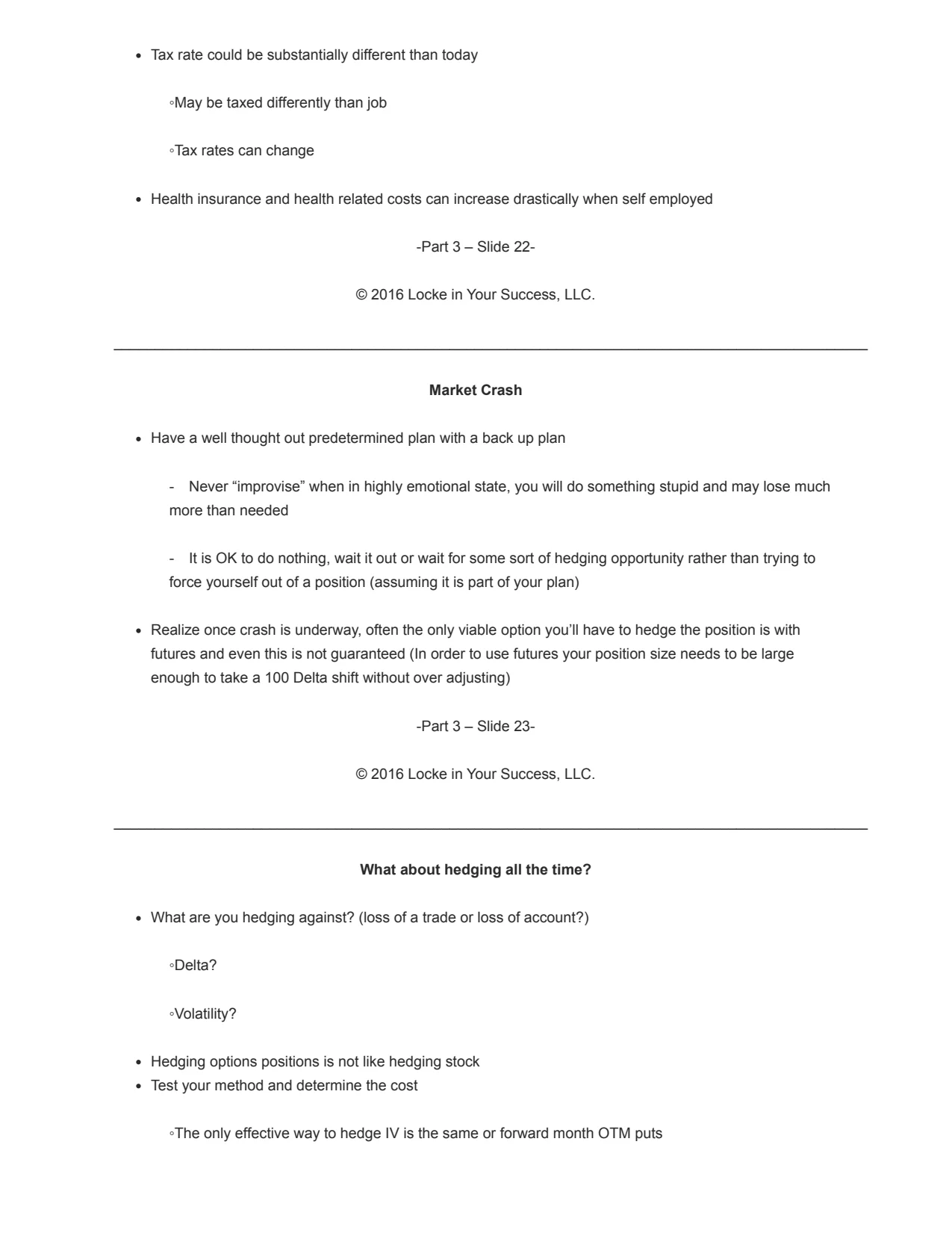
The transcript suggests that a person with a $100,000 trading account aims to reduce their monthly expenses to $5,000.
The transcript emphasizes the importance of understanding one's financial situation, including net worth, liabilities, and expenses, before entering a trading business.
04 26:41 Budgeting and Financial Management
The chapter covers budgeting practices, including reviewing monthly expenses, assessing family and auto expenses, managing credit card debts, and discussing financial efficiency. It emphasizes the importance of understanding expenses, cutting non-essential costs, and managing high-interest debts effectively.
A thorough budget review should include all monthly expenses, including fixed and variable costs, to ensure a clear understanding of financial commitments and potential areas for adjustment.
Long-term financial planning requires considering not only current monthly expenses but also future obligations such as health insurance, deductibles, and other long-term costs.
05 28:33 Spending Plans, Trading Strategies, and Financial Risk
The chapter discusses the structure of a spending plan, emphasizing the need for in-depth discussions to ensure proper setup. It covers tracking expenses, managing debts, and preparing for future financial needs. It then transitions to trading system evaluation, trade projections, high probability trades, and the importance of risk assessment. The discussion also includes expected earnings, capital requirements, and the realistic expectations of financial risk in trading.
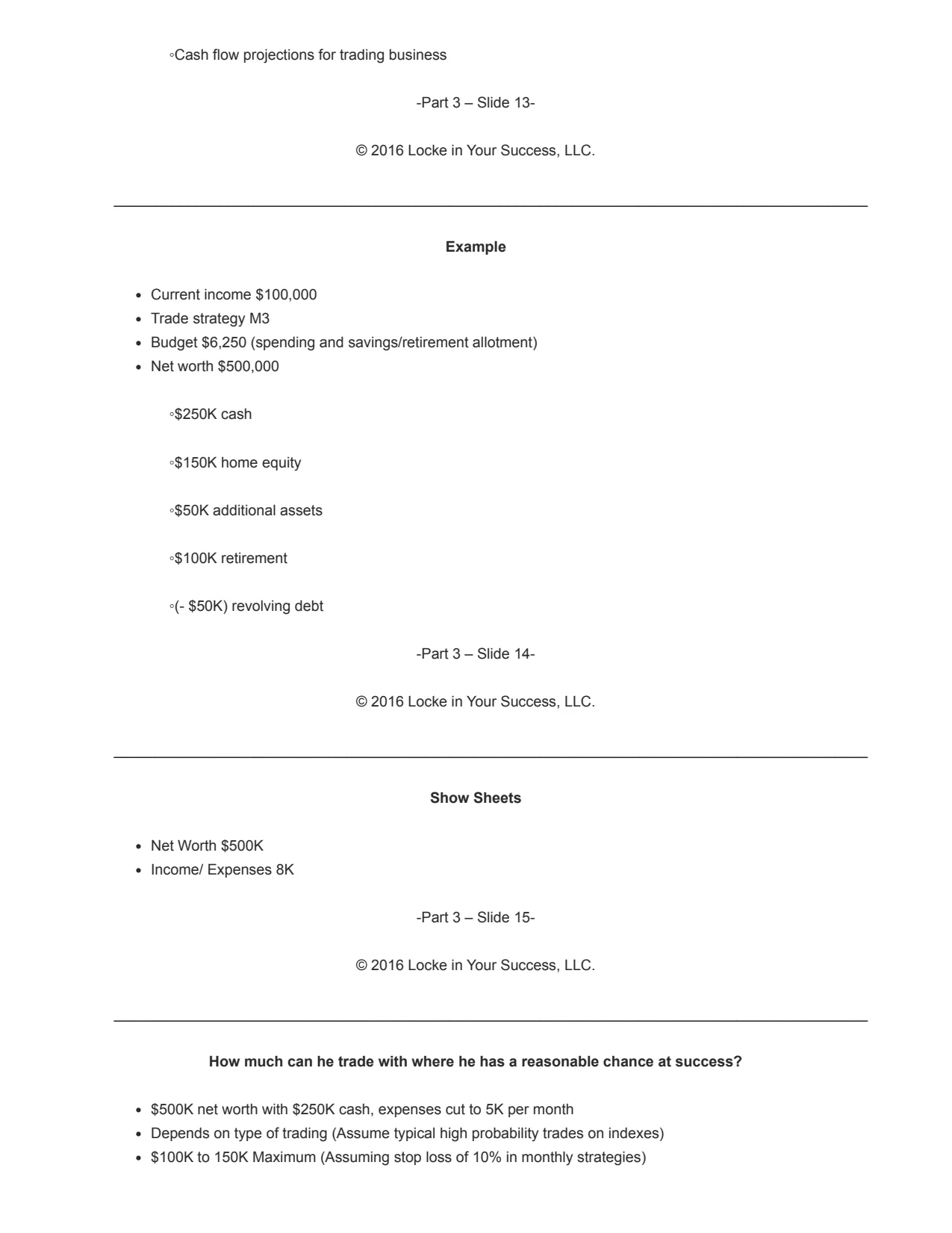
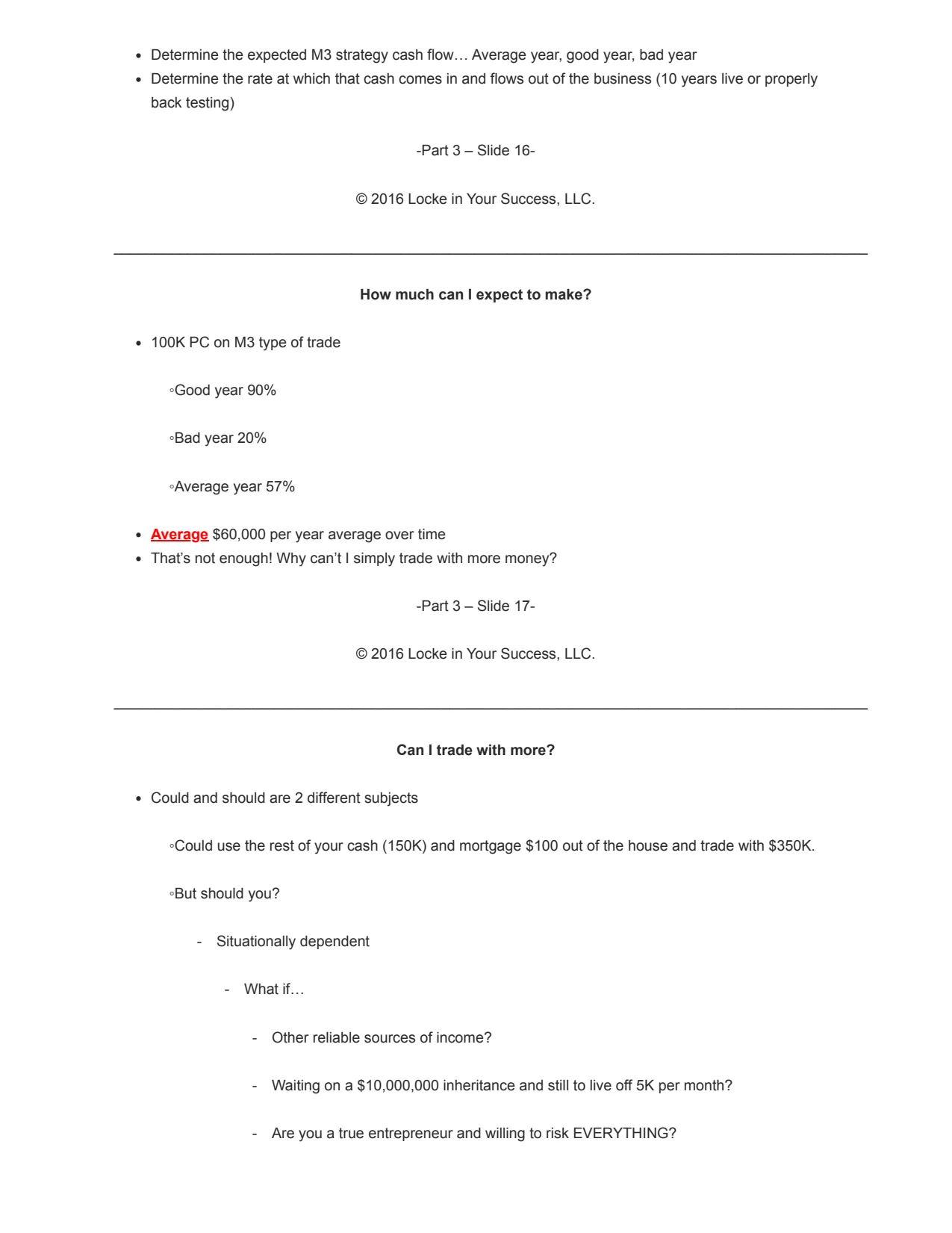

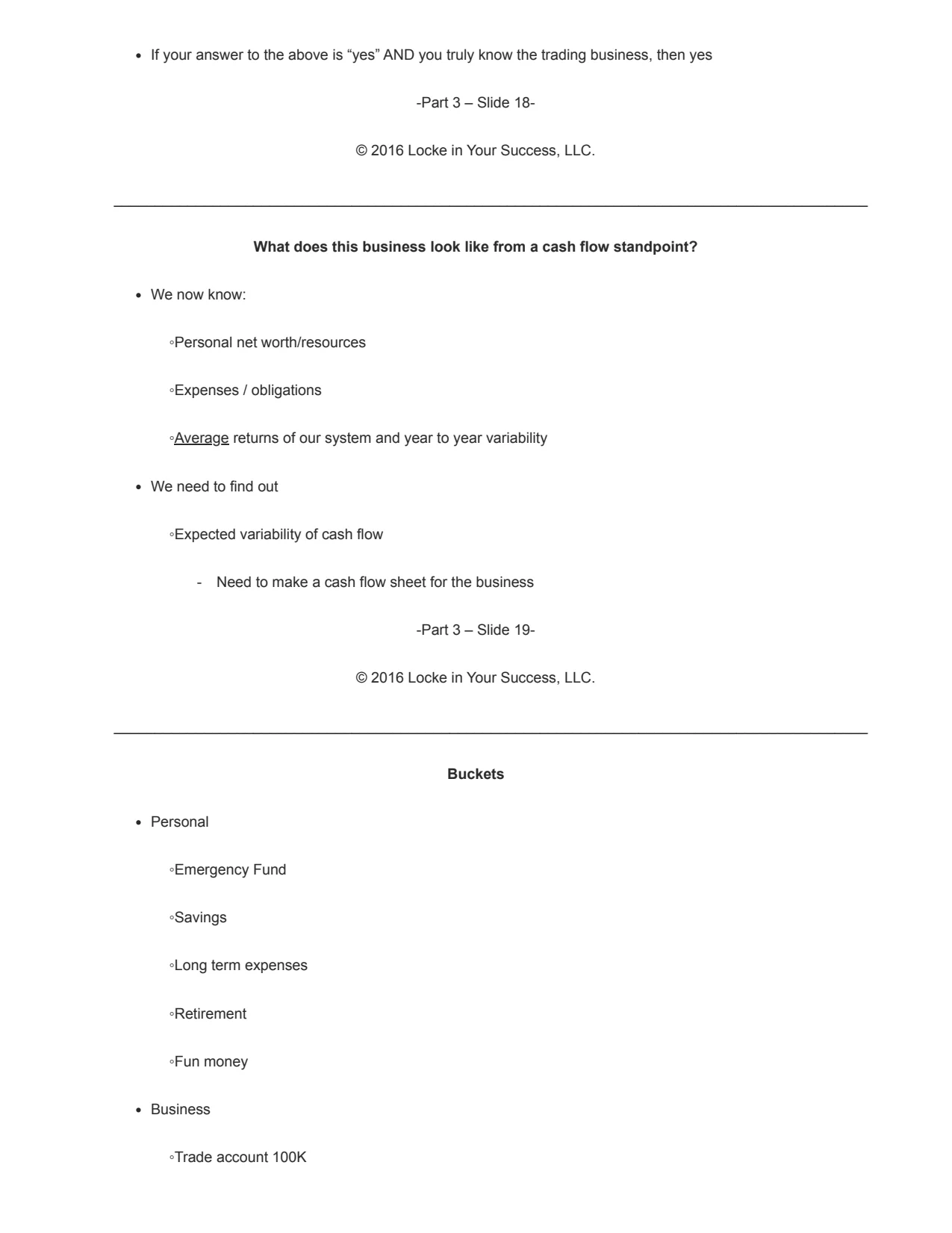
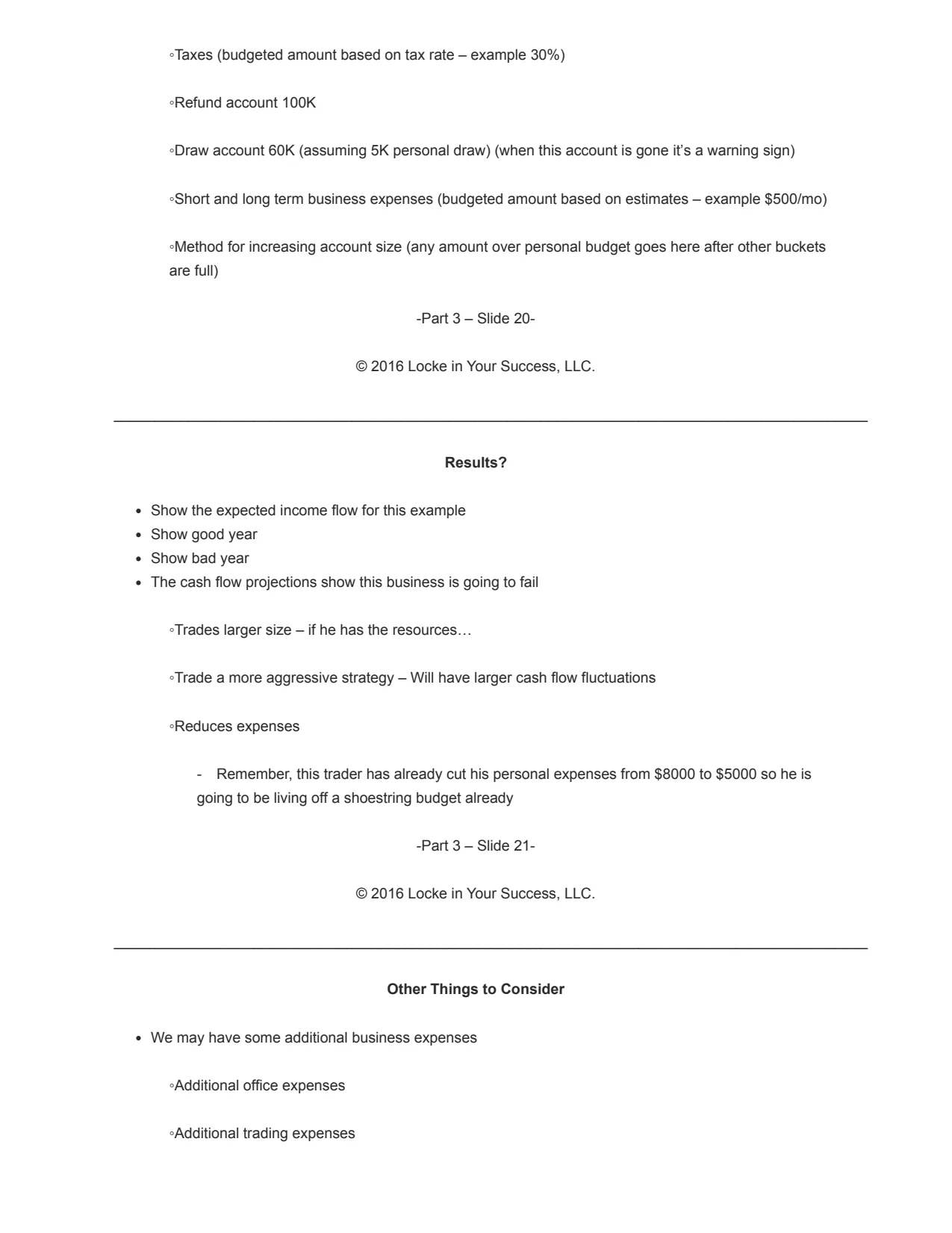
Segment your money into different accounts or 'buckets' for specific purposes such as trading, taxes, expenses, and drawdowns. This includes a trading account, a tax account, a reinvestment account, and a draw account for expenses.
Use historical results from a trading system to evaluate its performance. This includes back-testing results and comparing them to theoretical projections.
Some of your actual results may involve back trading, and you need to keep back trading with a grain of salt.
06 41:32 Understanding Actual Results and Financial Accounts
The speaker discusses the importance of understanding actual results and back trading, emphasizing caution. They also explain the concept of a refund account balance and its role in funding the regular trading account.
Some of your actual results may involve back trading, and you need to keep back trading with a grain of salt.
Make sure you did it right, because you want to be right here, right? But you want to know what this is actually going to look like.
07 41:49 Risk, Performance, and Market Dynamics
The speaker discusses the risks involved in trading, including potential capital loss. They share experiences of initial losses in 2013, the importance of a draw account for expenses, and the psychological impact of losses. The discussion also covers strategy performance, market variability, and the impact of implied volatility on trading strategies. The speaker concludes with an analysis of account balance and future planning.
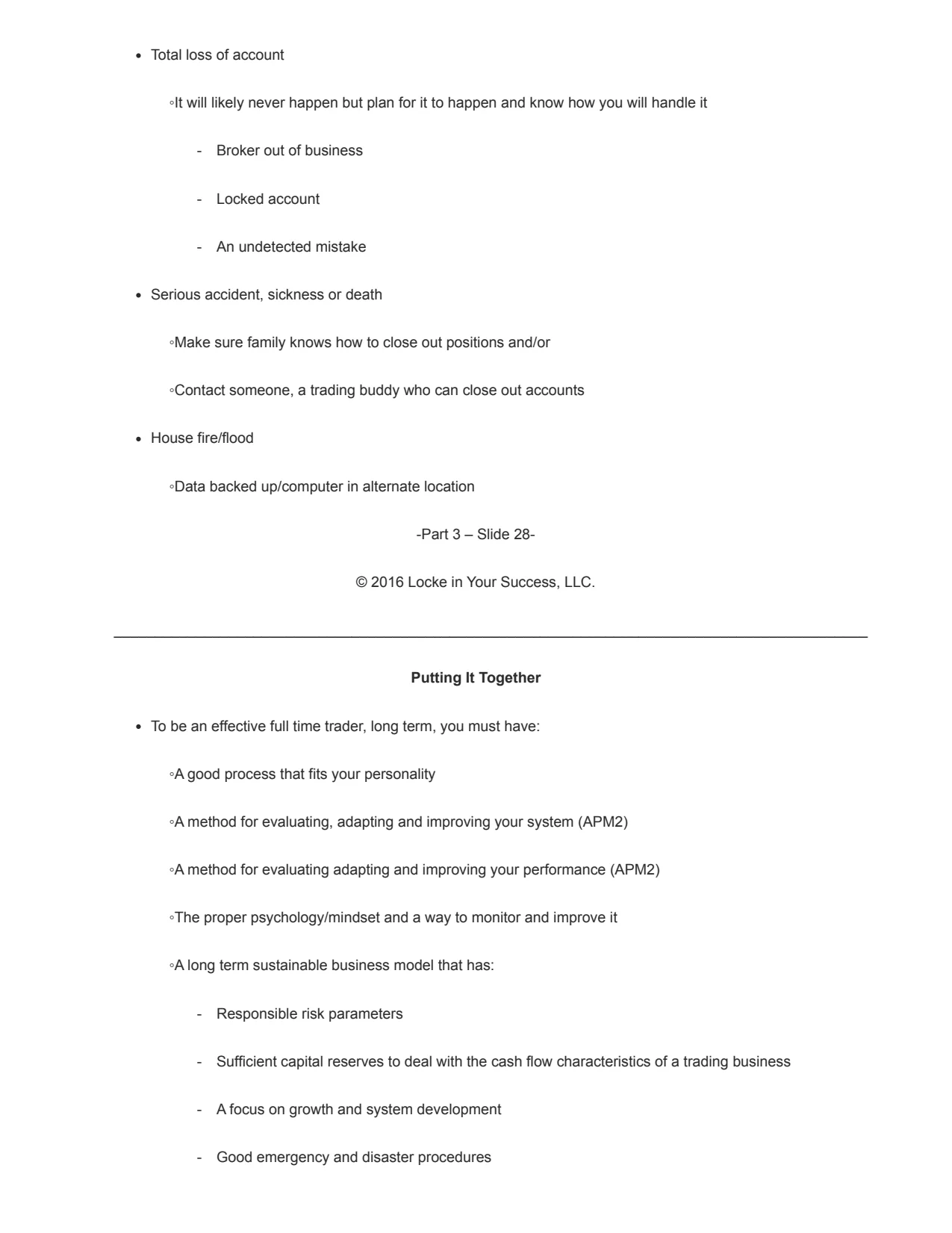
You should not risk every penny of your capital on a single trade. Instead, allocate a portion of your capital to trading, keeping the rest in a separate account for emergencies or expenses.
It is normal for a trading strategy to underperform for a period of time, and this does not necessarily mean the strategy is flawed.
08 54:17 Account Risk and Strategy Limitations
The chapter discusses the importance of maintaining a non-zero account balance to avoid financial risk, the emotional and practical impact of consecutive losses, and the limitations of the M3 strategy. It emphasizes the need for risk management and capital considerations.
An account balance reaching zero is a warning sign that something needs to change. If this persists over time, it indicates that the trading approach may not be sustainable, and adjustments or additional capital may be necessary.
Consecutive losses can trigger emotional responses that may affect decision-making, such as fear or frustration, which can lead to poor trading decisions.
09 59:04 Market Cycles, Confidence, and Personal Development
The chapter covers risk assessment in market cycles, the importance of adapting strategies to changing environments, and the role of confidence in trading. It also includes exercises to build confidence through visualization, self-talk, and physical actions.
Close your eyes and imagine a circle in front of you. Step into the circle and recall a time when you felt extremely confident. Recall the sights, sounds, and feelings of that moment. Squeeze your right fist and say 'power' to reinforce confidence. Step back out of the circle and observe any changes in color or sound. Re-enter the circle and feel the confidence and power rising through your body. Add additional resources to the circle, such as memories of feeling powerful or being on a roll.
Following trade alerts can lead to short-term success but is harmful in the long term. It may create a false sense of security and prevent traders from developing their own skills and confidence.
10 1:08:14 Reconnecting with Confidence Through Body Awareness
The speaker encourages the audience to step back into the circle and feel confidence returning to their body, emphasizing the connection between confidence and body awareness.
The practice involves recalling and re-experiencing positive emotional states (such as being loved, confident, and powerful) to build a mental resource that can be applied to future situations.